continue
Americanverb (used without object)
-
continues,
present (3rd person singular)
-
continued,
past participle, past
-
continuing
present participle
-
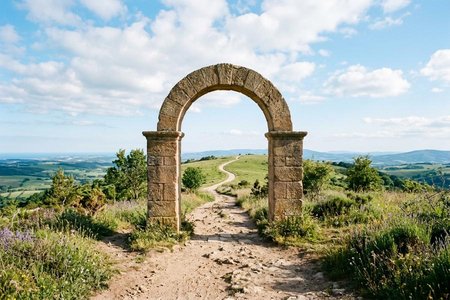
to go on after suspension or interruption.
The program continued after an intermission.
-
to go on or keep on, as in some course or action; extend.
The road continues for three miles.
- Antonyms:
- cease
-
to last or endure.
The strike continued for two months.
-
to remain in a particular state or capacity.
The general agreed to continue in command of the army.
-
to remain in a place; abide; stay.
Let us continue in this house forever.
verb (used with object)
-
continues,
present (3rd person singular)
-
continued,
past participle, past
-
continuing
present participle
-
to go on with or persist in.
to continue an action.
-
to carry on from the point of suspension or interruption.
He continued the concert after the latecomers were seated.
-
to extend from one point to another in space; prolong.
-
to say in continuation.
-
to cause to last or endure; maintain or retain, as in a position.
-
to carry over, postpone, or adjourn; keep pending, as a legal proceeding.
verb
-
(when tr, may take an infinitive) to remain or cause to remain in a particular condition, capacity, or place
-
(when tr, may take an infinitive) to carry on uninterruptedly (a course of action); persist in (something)
he continued running
-
(when tr, may take an infinitive) to resume after an interruption
we'll continue after lunch
-
to draw out or be drawn out; prolong or be prolonged
continue the chord until it meets the tangent
-
(tr) law to postpone or adjourn (legal proceedings)
Usage
Where does continue come from? Continue entered English around 1300–50. Coming into English through French, continue ultimately comes from the Latin continuāre, meaning “to make all one, join together, connect.” This verb could also mean, much like its English derivative, “to carry on, draw out, prolong, last”—that is, to continue. The Latin verb continuāre is formed from the adjective continuus. Does continuus look familiar? It’s the direct source of the English continuous, meaning “uninterrupted in time; without cessation” or “being in immediate connection or spatial relationship.”The Latin adjective continuus meant “uninterrupted, unbroken, continuous.” That’s right: continuus meant, well, continuous. Sometimes, there is a great a deal of continuity in word development. But we’re not done yet. The Latin continuus is itself ultimately based on another verb, continēre, “to hold or keep together.” So, something that continues—that is, it goes on, keeps on, or endures in some way—stays all held together, in an etymological manner of speaking. Dig deeperWe noted above that continue is ultimately connected to continēre, “to hold together.” Continēre is the source of some other familiar English words, including contain, continent, and content. Does knowing that all these words come from a verb meaning “to hold together” give you any deeper insights into these words?For all this talk of holding things together, we can, er, continue breaking apart the roots of the Latin verb continēre. It is composed of con-, a productive prefix with the sense of “with, together,” and tenēre, “to hold.”Derivations of tenēre appears in a great many English words, including detain, detention, entertain, tenacious, tenant, tenet, retain, retention, sustain, and sustenance. But don’t be fooled. While detain is related to detention and retain to retention, contain is not related to contention, or “strife, contest, controversy.” Contention is derived from the same Latin root that gives English contend.
Synonym Usage
Continue, endure, persist, persevere, last, remain imply existing uninterruptedly for an appreciable length of time. Continue implies duration or existence without break or interruption. Endure, used of people or things, implies persistent continuance against influences that tend to weaken, undermine, or destroy. Persist and persevere, used principally of people, both imply firm and steadfast continuance in the face of opposition. Persist suggests human opposition: He persisted after he had been warned; and persevere suggests opposition from any source, often an impersonal one: He persevered despite fatigue. Last often applies to something that holds out to a desired end, fresh, unimpaired, or unexhausted, sometimes under conditions that tend to produce the opposite effect: They had provisions enough to last all winter. Remain is especially applied to what continues without change in its essential state: He remained a bachelor.
Other Word Forms
Derived Forms
-
continuernoun
-
continuableadjective
-
noncontinuableadjective
-
continuinglyadverb
-
noncontinuablyadverb
Inflected Forms
Participles
Conjugated Forms
Present
-
continuesimple
-
continuessimple
-
have continuedperfect
-
has continuedperfect
-
am continuingprogressive
-
are continuingprogressive
-
is continuingprogressive
-
have been continuingperfect progressive
-
has been continuingperfect progressive
Past
-
continuedsimple
-
had continuedperfect
-
was continuingprogressive
-
were continuingprogressive
-
had been continuingperfect progressive
Future
Etymology
Origin of continue
First recorded in 1300–50; Middle English, from Anglo-French, from Latin continuāre “to make all one,” verbal derivative of continuus continuous
Explanation

To continue an activity is to keep it going, either with or without interruption. If you ask the newspaper to continue delivering your paper while you are on vacation, you want to receive all the news while you’re away. The verb continue is related to the word continuous, from the Latin word continuare, meaning “join together” or “connect.” When anything goes on without a break, like the middle school variety show, it continues, uninterrupted. You can also continue something that was paused or set aside. You could, for instance, continue watching the movie that you paused when the pizza was delivered and then continue to drive your parents crazy by texting your friends while watching the movie with them.
Vocabulary lists containing continue
"The Earth Under Sky Bear's Feet"
Looking to grow your vocabulary? Check out this interactive, curated word list from our team of English language specialists at Vocabulary.com – one of over 17,000 lists we've built to help learners worldwide!
"Zlateh the Goat"
Interested in learning more words like this one? Our team at Vocabulary.com has got you covered! You can review flashcards, quiz yourself, practice spelling, and more – and it's all completely free to use!
"A Conflict Close to Home"
Want to remember this word for good? Start your learning journey today with our library of interactive, themed word lists built by the experts at Vocabulary.com – we'll help you make the most of your study time!
Example Sentences
Examples are provided to illustrate real-world usage of words in context. Any opinions expressed do not reflect the views of Dictionary.com.
See Examples For:
Plaque may continue accumulating inside the arteries without producing any obvious warning signs.
From Science Daily ● Oct. 1, 2026

The early release scheme should continue, he said: "It's good. Tagging is better than prison".
From BBC ● Oct. 1, 2026

Although that dynamic will continue to allow Micron to raise prices and become even more profitable, Fairbanks said in a note to clients that the supply crunch will limit near-term growth.
From MarketWatch ● Oct. 1, 2026

We’ll continue to gather feedback from early testers as we iterate on guardrails before making Argon available to developers, enterprises, and consumers as soon as possible.
From The Wall Street Journal ● Oct. 1, 2026

My lips continue to move and I know where this apology is coming from.
From "The Brightwood Code" by Monica Hesse

The results suggest that the approach could potentially adapt as generative AI technology continues to evolve.
From Science Daily ● Oct. 1, 2026
The investigation into the circumstances leading to the car entering the water continues.
From BBC ● Oct. 1, 2026
“As climate change continues to reduce our snowpack, that’s a future that we need to find ways to grapple with,” said Ryan Walker, president of the Siskiyou County Farm Bureau.
From Los Angeles Times ● Oct. 1, 2026

The following month, Mickelson announced he was withdrawing from the Masters and that he would “be out for an extended period of time as my family continues to navigate a personal health matter.”
From Los Angeles Times ● Sep. 30, 2026
“No, of course not. I mean, I did know that Brightwood was the old name for this neighborhood,” she continues.
From "The Brightwood Code" by Monica Hesse
"If he hadn't had done that, they would have just got off, and I would have had to live with the fact that all happened," mother-of-two Georgia continued.
From BBC ● Oct. 1, 2026
Gauges of factory activity in Asia continued to signal expansion at the end of third quarter, as the artificial-intelligence boom offsets cost pressures and supply disruptions.
From The Wall Street Journal ● Oct. 1, 2026
Chris Tarver, president of the American Nurses Assn. of California, said she’s witnessed the need for continued research in immunotherapy research and supports the measure.
From Los Angeles Times ● Oct. 1, 2026
But a far from successful start at his new club - where he has conceded 23 goals in 11 games - has continued into international duty.
From BBC ● Oct. 1, 2026
“Truly, she couldn’t be less of a threat,” Clare continued.
From "The Undead Fox of Deadwood Forest" by Aubrey Hartman
The force is continuing the search for the girl's mother and urged her to make contact with police.
From BBC ● Oct. 1, 2026
Nicholas Razo, Santa Fe Springs’ assistant city manager, told The Times that the city had raised concerns with the league about subletting and took action after learning the practice was continuing.
From Los Angeles Times ● Oct. 1, 2026
Crude oil futures edged higher amid continuing uncertainty surrounding U.S.-Iran diplomatic efforts and the status of the Strait of Hormuz.
From The Wall Street Journal ● Sep. 30, 2026
The researchers are continuing to follow the children as they enter adolescence, a period when the risk of developing depression increases for many young people.
From Science Daily ● Sep. 29, 2026
I rested against the railing overlooking the basin and waited until I spotted Frankie before continuing on my way.
From "The City Beautiful" by Aden Polydoros
Definitions and idiom definitions from Dictionary.com Unabridged, based on the Random House Unabridged Dictionary, © Random House, Inc. 2023
Idioms from The American Heritage® Idioms Dictionary copyright © 2002, 2001, 1995 by Houghton Mifflin Harcourt Publishing Company. Published by Houghton Mifflin Harcourt Publishing Company.
