poetry
Americannoun
-
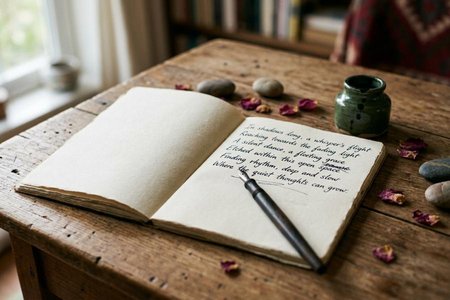
the art of rhythmical composition, written or spoken, for exciting pleasure by beautiful, imaginative, or elevated thoughts.
-
literary work in metrical form; verse.
- Antonyms:
- prose
-
prose with poetic qualities.
-
poetic qualities however manifested.
the poetry of simple acts and things.
-
poetic spirit or feeling.
The pianist played the prelude with poetry.
-
something suggestive of or likened to poetry.
the pure poetry of a beautiful view on a clear day.
noun
-
literature in metrical form; verse
-
the art or craft of writing verse
-
poetic qualities, spirit, or feeling in anything
-
anything resembling poetry in rhythm, beauty, etc
Usage
What is poetry? Poetry is literature that is written in verse and emphasizes the rhythmic use of words to create imagery. Works of poetry are called poems. A person who writes poetry is called a poet. Poetry is a major form of literature. The biggest difference that sets poetry apart from other forms of writing is that poetry uses verse, which is concerned with meter, rather than prose, which does not. Poetry also may not use complete sentences or punctuation marks. Instead, poetry places an importance on using words and syllables that give rhythm to a poem. There are many different forms of poetry, such as haiku, elegies, and sonnets. While some types of poems have rules on how they should be written, poets often break the rules if the poem will be better for it. You can find more information about these and other forms of poetry in our article, “12 Essential Types of Poetry.”
Synonym Usage
Poetry, verse agree in referring to the work of a poet. The difference between poetry and verse is usually the difference between substance and form. Poetry is lofty thought or impassioned feeling expressed in imaginative words: Elizabethan poetry. Verse is any expression in words which simply conforms to accepted metrical rules and structure: the differences between prose and verse.
Other Word Forms
Etymology
Origin of poetry
First recorded in 1350–1400; Middle English poetrie, from Medieval Latin poētria “poetic art,” derivative of poēta poet, but formation is unclear; probably not from Greek poiḗtria “poetess”
Explanation

Poetry is a form of literature that follows specific forms to create a rhythm and/or rhyme scheme. Without those elements we have the poetic form known as “free verse,” but it retains an elevated language that still makes it poetry. The noun poetry goes all the way back to the Latin poesis, meaning both "poetry" and "making." It usually refers to the specific genre of poetic works, a wide variety of styles tied together by the structured use of the language, but is also used to describe any especially beautiful language. The French writer Voltaire once said, “Poetry is the music of the soul, and, above all, of great and feeling souls.”
Vocabulary lists containing poetry
TEKS ELAR Academic Vocabulary List (5th-7th grades)
Looking to grow your vocabulary? Check out this interactive, curated word list from our team of English language specialists at Vocabulary.com – one of over 17,000 lists we've built to help learners worldwide!
Literary Genres - Introductory
Interested in learning more words like this one? Our team at Vocabulary.com has got you covered! You can review flashcards, quiz yourself, practice spelling, and more – and it's all completely free to use!
Literary Terms, Grade 8, Unit 1
Want to remember this word for good? Start your learning journey today with our library of interactive, themed word lists built by the experts at Vocabulary.com – we'll help you make the most of your study time!
Example Sentences
Examples are provided to illustrate real-world usage of words in context. Any opinions expressed do not reflect the views of Dictionary.com.
Chatbots such as ChatGPT learn to answer questions or write poetry from analyzing patterns in vast amounts of data.
From Los Angeles Times ● Sep. 17, 2026

Found alongside Peglar's seaman's certificate, they contain poetry as well as what appear to be descriptions of events that unfolded during the expedition.
From Science Daily ● Sep. 10, 2026

A researcher working on safety left the company earlier this year to study poetry, warning that “the world is in peril.”
From The Wall Street Journal ● Sep. 8, 2026

The event is being held at The Hub at the station, which opened in May last year to help people in crisis, and activities include poetry performances, gardening workshops, art and music.
From BBC ● Sep. 8, 2026

One day, when her BDM leader requested discussion topics, Sophie suggested that the girls discuss Heine’s poetry.
From "Hitler Youth: Growing Up in Hitler's Shadow" by Susan Campbell Bartoletti

Definitions and idiom definitions from Dictionary.com Unabridged, based on the Random House Unabridged Dictionary, © Random House, Inc. 2023
Idioms from The American Heritage® Idioms Dictionary copyright © 2002, 2001, 1995 by Houghton Mifflin Harcourt Publishing Company. Published by Houghton Mifflin Harcourt Publishing Company.
