
survive
Americanverb (used without object)
-
survives,
present (3rd person singular)
-
survived,
past participle, past
-
surviving
present participle
-
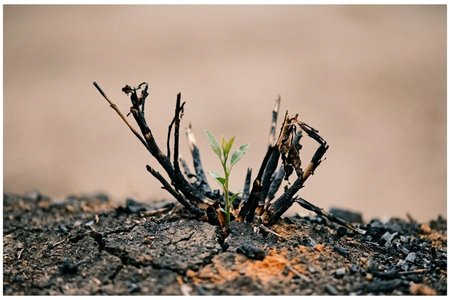
to remain alive after the death of someone, the cessation of something, or the occurrence of some event; continue to live.
Few survived after the holocaust.
-
to remain or continue in existence or use.
Ancient farming methods still survive in the Middle East.
-
to get along or remain healthy, happy, and unaffected in spite of some occurrence.
She's surviving after the divorce.
verb (used with object)
-
survives,
present (3rd person singular)
-
survived,
past participle, past
-
surviving
present participle
-
to continue to live or exist after the death, cessation, or occurrence of.
His wife survived him. He survived the operation.
-
to endure or live through (an affliction, adversity, misery, etc.).
She's survived two divorces.
verb
-
(tr) to live after the death of (another)
he survived his wife by 12 years
-
to continue in existence or use after (a passage of time, an adversity, etc)
-
informal to endure (something)
I don't know how I survive such an awful job
Synonym Usage
Survive, outlive refer to remaining alive longer than someone else or after some event. Survive usually means to succeed in keeping alive against odds, to live after some event that has threatened one: to survive an automobile accident. It is also used of living longer than another person (usually a relative), but, today, mainly in the passive, as in the fixed expression: The deceased is survived by his wife and children. Outlive stresses capacity for endurance, the time element, and sometimes a sense of competition: He outlived all his enemies. It is also used, however, of a person or object that has lived or lasted beyond a certain point: He has outlived his usefulness.
Other Word Forms
Derived Forms
-
survivabilitynoun
-
self-survivingadjective
-
survivableadjective
-
unsurvivedadjective
-
unsurvivingadjective
Inflected Forms
Participles
Conjugated Forms
Present
-
survivesimple
-
survivessimple
-
have survivedperfect
-
has survivedperfect
-
am survivingprogressive
-
are survivingprogressive
-
is survivingprogressive
-
have been survivingperfect progressive
-
has been survivingperfect progressive
Past
-
survivedsimple
-
had survivedperfect
-
was survivingprogressive
-
were survivingprogressive
-
had been survivingperfect progressive
Future
Etymology
Origin of survive
First recorded in 1425–75; late Middle English, from Middle French survivre, from Latin supervīvere, equivalent to super- super- + vīvere “to live”; see sur- 1, vivid
Explanation

To survive something is to live through it or endure it. You can survive a car accident, or you can survive your little brother's four-hour violin recital. The verb survive is from the Latin word supervivere, “live beyond,” or “live longer than.” Originally to survive was used in the legal context as in “you survive your wife and therefore inherit her kingdom.” However, nowadays you might say that you were able to survive a holiday at your in-laws’, that your brother survived his first round of job interviews, or that you will never survive another all-day trip to the zoo in ninety degree heat.
Vocabulary lists containing survive
Beowulf vocabulary
Looking to grow your vocabulary? Check out this interactive, curated word list from our team of English language specialists at Vocabulary.com – one of over 17,000 lists we've built to help learners worldwide!
"The Constitution"
Interested in learning more words like this one? Our team at Vocabulary.com has got you covered! You can review flashcards, quiz yourself, practice spelling, and more – and it's all completely free to use!
Unit 1, Week 1
Want to remember this word for good? Start your learning journey today with our library of interactive, themed word lists built by the experts at Vocabulary.com – we'll help you make the most of your study time!
Example Sentences
Examples are provided to illustrate real-world usage of words in context. Any opinions expressed do not reflect the views of Dictionary.com.
See Examples For:
Might the armed forces not survive the ordeal of Vietnam?
From Salon ● Sep. 20, 2026

The genetic evidence suggests that plague did not simply survive in one place and repeatedly spread outward from a single source.
From Science Daily ● Sep. 20, 2026

The goal is to put those findings to work on the ground by planting acorns from trauma-affected trees that still survive.
From Los Angeles Times ● Sep. 19, 2026

"Most individuals are unable to survive the British winter, but if temperatures continue to rise as a result of climate change, we may well see them becoming permanent residents," Benwell said.
From BBC ● Sep. 19, 2026

And neither of them would survive very long out here if they took a dip in freezing water.
From "Two Degrees" by Alan Gratz

Conservationists hope the move will provide a vital safeguard for the future of a plant that now survives in the wild as a single tree clinging to a cliff face.
From BBC ● Sep. 17, 2026
If a new queen survives until her first brood emerges as adult workers, though, then the odds are in her favour as she no longer needs to undertake risky foraging.
From Science Daily ● Sep. 11, 2026
If he survives the rampaging zombies, there’s a major life change on the horizon: His girlfriend has recently told him she is pregnant, and he’s skeptical about the potential of fatherhood.
From The Wall Street Journal ● Sep. 9, 2026

Every hard-earned dollar put down in the name of “Coyote vs. Acme” also goes toward ensuring that “Looney Tunes,” as a property, survives.
From Salon ● Aug. 30, 2026
The great joke about Puttenham, though, is that he survives not only for his work on rhetoric but as an instance of its effectiveness.
From "Words Like Loaded Pistols" by Sam Leith
Normandy veteran Kenneth Hay, who survived being captured just weeks after D-Day and spent years educating children about World War Two, has died aged 101.
From BBC ● Sep. 21, 2026
For years, debt-saddled investors have survived on lenders’ willingness to extend the life of the loans.
From The Wall Street Journal ● Sep. 21, 2026
Instead, it may have survived as an ideal system believed to have been valid during the Creation of the world and potentially destined to return in the End of Days.
From Science Daily ● Sep. 20, 2026
The litigation began in 2024 and has already survived one previous dismissal.
From Salon ● Sep. 19, 2026
We had just gained some merchandise and survived the haunted desert.
From "The Many Assassinations of Samir, the Seller of Dreams" by Daniel Nayeri
“In such a political environment, no surviving veterans of Hengyang Battle dared to raise their heads.”
From The Wall Street Journal ● Sep. 18, 2026
The findings suggest that surviving an initial assault may leave a lasting biological legacy.
From Science Daily ● Sep. 18, 2026
Today, the last surviving wild tree is supported by ropes on a steep volcanic outcrop to prevent it from falling.
From BBC ● Sep. 17, 2026
Those surviving spouses, at full retirement age or older, generally get 100% of their late spouse’s basic benefit amount.
From MarketWatch ● Sep. 15, 2026

Having canned enough food to feed yourself could mean the difference between surviving until spring or starving.
From "Reaching for the Moon" by Katherine Johnson
Definitions and idiom definitions from Dictionary.com Unabridged, based on the Random House Unabridged Dictionary, © Random House, Inc. 2023
Idioms from The American Heritage® Idioms Dictionary copyright © 2002, 2001, 1995 by Houghton Mifflin Harcourt Publishing Company. Published by Houghton Mifflin Harcourt Publishing Company.
