Fossil Words: Archaic Terms Preserved in Everyday Phrases
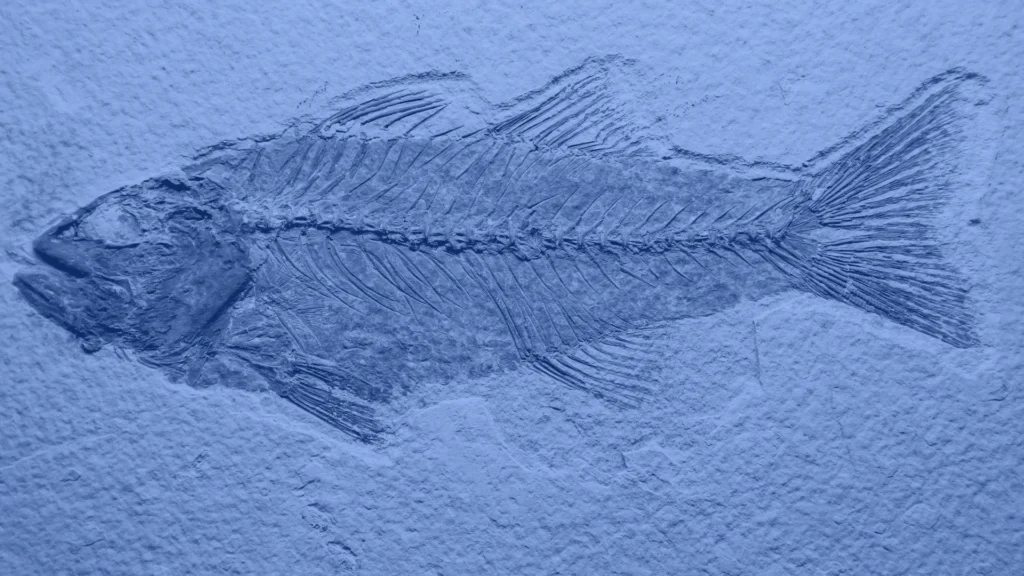
A fossil word is a word that has become broadly obsolete but survives because it is preserved inside a fixed phrase or idiom. People repeat the phrase, even though the word itself rarely appears independently. The idiom functions like linguistic amber, preserving a nearly extinct word long after its everyday usage has faded.
Here are several fossil words that still circulate in modern English.
Bated
As in “with bated breath”
The verb bate is a shortened, archaic form of abate, meaning “to lessen,” and bated is its past participle. Therefore, with bated breath originally meant something like “with lessened breath,” similar to the modern phrase “short of breath.” While bate is no longer generally used, “with bated breath” has survived in part thanks to William Shakespeare, who used it in The Merchant of Venice.
Fro
As in “to and fro”
Older varieties of English had a lot of ways to say from, including fro, fra, fram, and from itself. Over time, from became the preferred word, sending the others to the dustbin of history. Of the losers, only fro maintains a tiny presence in the language, fossilized in to and fro.
Bide
As in “bide one’s time”
Bide comes from Old English bidan, meaning “to stay, live, or remain.” Similar to bate and abate, bide is related to abide (as well as abode). In some dialects of Scotland and Northern England, bide is still sometimes used independently to mean “tolerate or withstand,” but most English speakers use abide in its place when not part of the idiom bide one’s time.
Ado
As in “without further ado”
The word ado comes from an older phrase that meant “to do.” Today, we use the word to when creating a basic form of a verb known as an infinitive, as in “to speak” or “to walk.” But in some older forms of English, a word similar to at was sometimes used to make infinitives instead. Over time, the phrase “at do” (meaning “to do”) was compressed into a single word, ado, which further evolved into a noun meaning “fuss, commotion, or activity.” (We use the term “to-do” similarly in modern English, as in “The party-planning process was a whole to-do.”) But ado eventually stopped being used independently, and survives only in idioms like without further ado. There’s also much ado about nothing, both an idiom and the title of a comedy from Shakespeare.
Lam
As in “on the lam”
In the Elizabethan era, lam functioned as both a verb meaning “to beat” and as a noun meaning “a heavy blow.” The American slang phrase on the lam, meaning “running from the law,” likely draws on those earlier senses, a bit like how “beat it” suggests running away. Lam is also fossilized in lambast, also spelled lambaste, which combines lam with a 17th-century sense of baste, which meant “to thrash.”
Spick and Span
As in “spick-and-span”
Both spick and span are fossilized in the phrase spick-and-span. A spick was a nail, and a span was a wood chip. The phrase originally referred to something freshly made, such as a new nail from a smith or a fresh shaving from cut timber. The expression “span-new” appeared in the 17th century as a variation on “brand-new,” but that phrase eventually died out too, leaving behind only “spick-and-span.”
Caboodle
As in “kit and caboodle” and “the whole caboodle”
Earlier versions of caboodle phrases included “kit and boodle” and “the whole boodle.” The still-living word kit in this phrase refers to a collection of items or supplies used to do a job, and it likely comes from the Dutch kitte, meaning “a wooden vessel” or “a wooden ship.” Both boodle and the now-fossilized caboodle mean “collection,” and they are thought to come from the Dutch boedel, meaning “property.” Therefore, the phrase kit and caboodle initially suggested an entire ship and its cargo before it became used to describe the entirety of anything. (Marketers brought back Caboodles as a brand name for a popular makeup caddy in the 1980s, but the non-branded use of the word is definitely fossilized.)
Turpitude
As in “moral turpitude”
Turpitude comes from the Latin turpis, meaning “vile or ugly.” The phrase moral turpitude refers to serious ethical wrongdoing or immoral conduct, and it has a tendency to show up in legalese. The word occasionally appears independently, but even then, it is usually just a paraphrase of “moral turpitude.”
Inclement
As in “inclement weather”
Inclement comes from a combination of the Latin clementem, meaning “mild or placid,” with the negative prefix in-. So “inclement weather” is the opposite of mild weather — it’s severe. Although it’s not totally unheard of to encounter this word without weather attached, it is vastly more common to hear the two together. You might say that inclement is currently undergoing fossilization.
