dead
Americanadjective
-
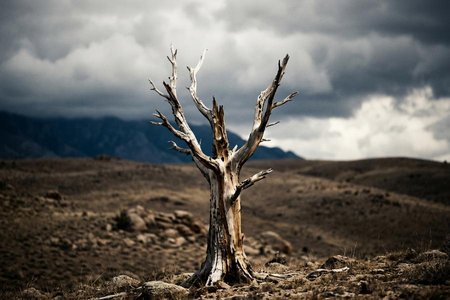
no longer living; deprived of life.
dead people;
dead flowers;
dead animals.
-
brain-dead.
-
not endowed with life; inanimate.
dead stones.
-
resembling death; deathlike.
a dead sleep;
a dead faint.
-
bereft of sensation; numb.
He was half dead with fright.
My leg feels dead.
-
lacking sensitivity of feeling; insensitive.
dead to the needs of others.
- Synonyms:
- cold, callous, indifferent, unfeeling
-
incapable of being emotionally moved; unresponsive.
dead to the nuances of the music.
-
(of an emotion) no longer felt; ended; extinguished: dead affections.
a dead passion;
dead affections.
-
no longer current or prevalent, as in effect, significance, or practice; obsolete.
a dead law;
a dead controversy.
-
no longer functioning, operating, or productive.
a dead motor;
a dead battery.
- Synonyms:
- inoperative, inert
-
not moving or circulating; stagnant; stale.
dead water;
dead air.
- Synonyms:
- motionless, still
-
utterly tired; exhausted.
They felt dead from the six-hour trip.
-
(of a language) no longer in use as a sole means of oral communication among a people.
Latin is a dead language.
-
without vitality, spirit, enthusiasm, or the like.
a dead party.
-
lacking the customary activity; dull; inactive.
a dead business day.
-
dead silence;
The plan was a dead loss.
-
sudden or abrupt, as the complete stoppage of an action.
The bus came to a dead stop.
-
put out; extinguished.
a dead cigarette.
-
without resilience or bounce.
a dead tennis ball.
-
dead land.
- Synonyms:
- sterile
-
the dead center of a circle.
-
a dead shot.
-
a dead line.
-
tasteless or flat, as a beverage.
a dead soft drink.
-
flat rather than glossy, bright, or brilliant.
The house was painted dead white.
-
without resonance; anechoic.
dead sound;
a dead wall surface of a recording studio.
-
not fruitful; unproductive.
dead capital.
-
Law. deprived of civil rights so that one is in the state of civil death, especially deprived of the rights of property.
-
Sports. out of play.
a dead ball.
-
(of a golf ball) lying so close to the hole as to make holing on the next stroke a virtual certainty.
-
(of type or copy) having been used or rejected.
-
Electricity.
-
free from any electric connection to a source of potential difference and from electric charge.
-
not having a potential different from that of the earth.
-
-
Metallurgy. (of steel)
-
fully killed.
-
unresponsive to heat treatment.
-
-
(of the mouth of a horse) no longer sensitive to the pressure of a bit.
-
noting any rope in a tackle that does not pass over a pulley or is not rove through a block.
noun
-
the period of greatest darkness, coldness, etc..
the dead of night;
the dead of winter.
-
the dead, dead persons collectively.
Prayers were recited for the dead.
adverb
-
dead right;
dead tired.
-
with sudden and total stoppage of motion, action, or the like.
He stopped dead.
-
The island lay dead ahead.
idioms
-
dead to rights, in the very act of committing a crime, offense, or mistake; red-handed: Also bang to rights
Just when you think you’ve got the killer dead to rights, you find out there’s a whole lot more going on.
-
dead in the water, completely inactive or inoperable; no longer in action or under consideration.
Our plans to expand the business have been dead in the water for the past two months.
adjective
-
-
no longer alive
-
( as noun )
the dead
-
-
not endowed with life; inanimate
-
no longer in use, valid, effective, or relevant
a dead issue
a dead language
-
unresponsive or unaware; insensible
he is dead to my strongest pleas
-
lacking in freshness, interest, or vitality
a dead handshake
-
devoid of physical sensation; numb
his gums were dead from the anaesthetic
-
resembling death; deathlike
a dead sleep
-
no longer burning or hot
dead coals
-
(of flowers or foliage) withered; faded
-
(prenominal) (intensifier)
a dead stop
a dead loss
-
informal very tired
-
electronics
-
drained of electric charge; fully discharged
the battery was dead
-
not connected to a source of potential difference or electric charge
-
-
lacking acoustic reverberation
a dead sound
a dead surface
-
sport (of a ball, etc) out of play
-
unerring; accurate; precise (esp in the phrase a dead shot )
-
lacking resilience or bounce
a dead ball
-
printing
-
(of type) set but no longer needed for use Compare standing
-
(of copy) already composed
-
-
not yielding a return; idle
dead capital
-
informal certain to suffer a terrible fate; doomed
you're dead if your mother catches you at that
-
(of colours) not glossy or bright; lacklustre
-
stagnant
dead air
-
military shielded from view, as by a geographic feature or environmental condition
a dead zone
dead space
-
informal completely dead
-
informal stupid or unintelligent
-
informal unsuccessful, and with little hope of future success
the talks are now dead in the water
-
informal unaware of one's surroundings, esp fast asleep or very drunk
-
-
to abandon
-
informal to surpass or outdistance by far
-
-
informal to refuse to wear or to go to
noun
adverb
-
(intensifier)
dead easy
stop dead
dead level
-
exactly right
Synonym Usage
Dead, deceased, extinct, lifeless refer to something that does not have or appear to have life. Dead is usually applied to something that had life but from which life is now gone: dead trees. Deceased, a more formal word than dead, is applied to human beings who no longer have life: a deceased member of the church. Extinct is applied to a species, genus, or the like, no member of which is any longer alive: Mastodons are now extinct. Lifeless can be applied to a living thing that no longer appears to be alive ( the lifeless body of an unidentified man ) or to something that may never have been a living thing ( the lifeless materials of these minerals ).
Other Word Forms
Etymology
Origin of dead
First recorded before 950; Middle English deed, Old English dēad; cognate with Gothic dauths, German tot, Old Norse daudhr; originally, past participle; see die 1
Explanation

Someone who's dead is not alive anymore. If you accidentally hit a squirrel with your car, you might stop and check to see if it's alive or dead. People — and animals — who are deceased are dead, and if you forget to water your favorite plant, it may be dead too. You can even use this word for inanimate objects: when your car's battery runs out of power, your car won't start because it's dead. People describe themselves as dead when they're exhausted or lacking appropriate emotion: "Her voice was dead and cold." If your town is boring, you can say, "It's dead here on the weekends."
Example Sentences
Examples are provided to illustrate real-world usage of words in context. Any opinions expressed do not reflect the views of Dictionary.com.
See Examples For:
While Mellaart’s work revealed much about this lost city—including the fact that its residents buried their dead under their floors—much remains unknown.
From The Wall Street Journal ● Oct. 14, 2026

Rebecca Onion declares that the miniseries is a bracing delight, akin to “kissing a dead fish and taking a shot”—and that’s a compliment!
From Slate ● Oct. 14, 2026

Vietnam held funeral rites for more than 700 of its war dead on Wednesday, unearthed in a major push to identify those missing from decades of conflict with France and the United States.
From Barron's ● Oct. 14, 2026

“I just felt like America is not dead yet, right? We still have these things, and they’re still worth fighting for,” Alexandra said.
From Los Angeles Times ● Oct. 13, 2026

Torak turned over and over like a dead fish.
From "Wolf Brother" by Michelle Paver

A sold-out crowd of 5,000 was surprised when the Braves were down by 21 points at halftime and the offense looked deader than Elvis.
From Los Angeles Times ● Aug. 22, 2026
Johnson’s confident declarations that this bill is deader than dirt are easy to make now, when the bill is still the Senate’s problem.
From Slate ● Jan. 30, 2024
Now the creature represents extinction itself—you can’t get deader than a dodo.
From Scientific American ● Jan. 31, 2023

As the sun begins to disappear over the Puerto Rican palms Wednesday, Allenby manages to work an approach—into the breeze off the Caribbean coast, from a lie that’s deader than dead—onto the 11th green.
From Golf Digest ● Feb. 20, 2020
History is deader than Laika the space dog.
From "100 Sideways Miles" by Andrew Smith
Los Angeles has one of the deadest downtowns in the world, according to a new survey.
From Los Angeles Times ● Jun. 13, 2026
In 1873, a correspondent to this journal fretted, “Science is all but dead in England … perhaps deadest of all at our Universities.”
From Nature ● Feb. 18, 2019
And Stone guarantees that it’s a beautifully shot reality, crisply realized even in the darkest, deadest hours of night.
From The Verge ● Mar. 9, 2016
Christmas, like other winter-solstice holidays, evolved in part as an antidote to the darkest, deadest time of year.
From New York Times ● Dec. 22, 2015
I’m the deadest zombie ghost vampire who ever died.
From "What If It's Us" by Becky Albertalli and Adam Silvera
Definitions and idiom definitions from Dictionary.com Unabridged, based on the Random House Unabridged Dictionary, © Random House, Inc. 2023
Idioms from The American Heritage® Idioms Dictionary copyright © 2002, 2001, 1995 by Houghton Mifflin Harcourt Publishing Company. Published by Houghton Mifflin Harcourt Publishing Company.
