slow
Americanadjective
-
slower,
comparative
-
slowest
superlative
-
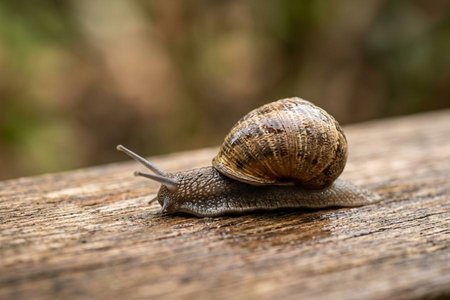
moving or proceeding with little or less than usual speed or velocity.
a slow train.
- Synonyms:
- unhurried
- Antonyms:
- fast
-
characterized by lack of speed.
a slow pace.
- Synonyms:
- unhurried
- Antonyms:
- fast
-
taking or requiring a comparatively long time for completion.
a slow meal; a slow trip.
- Antonyms:
- fast
-
requiring or taking a long time for growing, changing, or occurring; gradual.
a plant of slow growth.
-
made, created, or done in a careful, thorough, or traditional way in order to ensure such benefits as quality, environmental sustainability, or time for mental reflection: What's known as slow journalism is an approach to reporting that avoids superficial headlines and instead focuses on in-depth storytelling and a more considered analysis of events.
Give slow tourism a try as you leisurely explore this charming island, soak in the surrounding nature, and savor local encounters.
What's known as slow journalism is an approach to reporting that avoids superficial headlines and instead focuses on in-depth storytelling and a more considered analysis of events.
-
sluggish in nature, disposition, or function.
- Synonyms:
- slothful, lazy, indolent, dilatory, sluggardly
-
dull of perception or understanding; mentally dull.
a slow child.
- Synonyms:
- dense
-
not prompt, readily disposed, or in haste (usually followed by to or an infinitive).
slow to anger; slow to take offense.
-
burning or heating with little speed or intensity, as a fire or an oven.
-
slack; not busy.
The market was slow today.
-
having some quality that retards speed or causes movement, progress, work, etc., to be accomplished at less than the usual or expected rate of speed: a slow road.
a slow, careful worker;
a slow road.
-
running at less than the proper rate of speed or registering less than the proper time, as a clock.
-
passing heavily or dragging, as time.
It's been a slow afternoon.
-
not progressive; behind the times: a slow town.
-
dull, humdrum, uninteresting, or tedious.
What a slow party!
- Synonyms:
- boring
-
Photography. requiring long exposure, as by having a small lens diameter or low film sensitivity.
a slow lens or film.
-
(of the surface of a race track) sticky from a fairly recent rain and in the process of drying out.
adverb
verb (used with object)
-
slows,
present (3rd person singular)
-
slowed,
past participle, past
-
slowing
present participle
verb (used without object)
-
slows,
present (3rd person singular)
-
slowed,
past participle, past
-
slowing
present participle
adjective
-
performed or occurring during a comparatively long interval of time
-
lasting a comparatively long time
a slow journey
-
characterized by lack of speed
a slow walker
-
(prenominal) adapted to or productive of slow movement
the slow lane of a motorway
-
(of a clock, etc) indicating a time earlier than the correct time
-
given to or characterized by a leisurely or lazy existence
a slow town
-
not readily responsive to stimulation; intellectually unreceptive
a slow mind
-
dull or uninteresting
the play was very slow
-
not easily aroused
a slow temperament
-
lacking promptness or immediacy
a slow answer
-
unwilling to perform an action or enter into a state
slow to anger
-
behind the times
-
(of trade, etc) unproductive; slack
-
(of a fire) burning weakly
-
(of an oven) cool
-
photog requiring a relatively long time of exposure to produce a given density
a slow lens
-
sport (of a track, etc) tending to reduce the speed of the ball or the competitors
-
cricket (of a bowler, etc) delivering the ball slowly, usually with spin
adverb
verb
Commonly Confused
As an adverb, slow has two forms, slow and slowly. Slowly appeared first in the 15th century; slow came into use shortly thereafter. Both are standard today in certain uses. Originally, slow was used both preceding and following the verb it modified. Today, it is used chiefly in imperative constructions with short verbs of motion ( drive, run, turn, walk, etc.), and it follows the verb: Drive slow. Don't walk so slow. This use is more common in speech than in writing, although it occurs widely on traffic and road signs. Slow also combines with present participles in forming adjectives: slow-burning; slow-moving. In this use it is standard in all varieties of speech and writing. Slowly is by far the more common form of the adverb in writing. In both speech and writing it is the usual form in preverb position ( He slowly drove down the street. The couple slowly strolled into the park ) and following verbs that are not imperatives ( He drove slowly down the street. The couple strolled slowly through the park ). See also quick, sure.
Synonym Usage
Slow, deliberate, gradual, leisurely mean unhurried and not happening rapidly. That which is slow acts or moves without haste or rapidity: a slow procession of cars. Deliberate implies the slowness that marks careful consideration before and while acting: a deliberate and calculating manner. Gradual suggests the slowness of something that advances one step at a time: a gradual improvement in service. That which is leisurely moves with the slowness allowed by ample time or the absence of pressure: an unhurried and leisurely stroll. See dull.
Other Word Forms
Derived Forms
-
overslownessnoun
-
slownessnoun
-
unslownessnoun
-
overslowadjective
-
ultraslowadjective
-
unslowadjective
-
unslowedadjective
-
overslowlyadverb
-
slowlyadverb
-
ultraslowlyadverb
-
unslowlyadverb
Inflected Forms
Adjectives
Participles
Conjugated Forms
Present
-
slowsimple
-
slowssimple
-
have slowedperfect
-
has slowedperfect
-
am slowingprogressive
-
are slowingprogressive
-
is slowingprogressive
-
have been slowingperfect progressive
-
has been slowingperfect progressive
Past
-
slowedsimple
-
had slowedperfect
-
was slowingprogressive
-
were slowingprogressive
-
had been slowingperfect progressive
Future
Etymology
Origin of slow
First recorded before 900; Middle English; Old English slāw “sluggish, dull”; cognate with Dutch sleeuw; cf. sloth
Explanation

Slow things don't move fast, but take a while to get where they're going or do what they're doing. Traveling on a slow train might be fun, but you'll get to California faster on a plane. If it takes you a long time to finish a book, you're a slow reader, and if it takes years to become fluent in a foreign language, you can call it a slow process. Slow music is relaxing, with a leisurely beat. Sometimes slow means "boring or dull," like a slow movie plot, or "running behind," like the slow clock on the wall in your math class. As a verb, slow means "to reduce speed or intensity."
Example Sentences
Examples are provided to illustrate real-world usage of words in context. Any opinions expressed do not reflect the views of Dictionary.com.
See Examples For:
This explains why breadth in the S&P’s slow grind higher of late has been so narrow.
From MarketWatch ● Oct. 12, 2026

She described the picture as "mixed", with improvements slow and uneven.
From Barron's ● Oct. 12, 2026

Fans of the subgenre, known and loved for its depiction of journalism’s slow yet effective behind-the-scenes processes, might see this as a fatal flaw.
From Salon ● Oct. 11, 2026

The 2026 study did not examine long-term cartilage deterioration, so it cannot establish whether these additional walking strategies slow osteoarthritis progression.
From Science Daily ● Oct. 11, 2026

I twist my spoon over the cup, watching the shake plop off in slow motion.
From "Legendary Frybread Drive-In" by Cynthia Leitich Smith

"Everyone was hoping... this would be a game changer. And we continue to believe that it absolutely has the potential," although corporate engagement had been "slower" than anticipated, said Schomaker.
From Barron's ● Oct. 12, 2026
Also cutting into sales of Western firms are the economy’s slower growth.
From The Wall Street Journal ● Oct. 10, 2026

This high level of temporal precision allowed the team to examine rapid changes in brain activity that might be difficult to distinguish using slower measurement techniques.
From Science Daily ● Oct. 9, 2026
Seafood has been slower to face such scrutiny, though, as the world leans further into aquaculture, that may change, she said, particularly if more governments begin restricting imports tied to illegality or unsustainable practices.
From Los Angeles Times ● Oct. 9, 2026

Photocopy machines were a lot slower in 1969—each sheet had to be set on the glass by hand, and it took several seconds to copy a single page.
From "Most Dangerous: Daniel Ellsberg and the Secret History of the Vietnam War" by Steve Sheinkin
And while Stafford’s numbers are more middling than fall-off-a-cliff poor, they rank among his slowest statistical starts.
From Los Angeles Times ● Oct. 11, 2026
That has led to the industry’s slowest release of new vehicles since at least the 1970s, or a “product drought,” according to research by John Murphy, an independent analyst.
From The Wall Street Journal ● Oct. 3, 2026
On Wednesday, payroll firm ADP reported that US private sector hiring had bounced back strongly in September, after registering its slowest pace this year the month before.
From Barron's ● Sep. 30, 2026
In August, the core consumer-price index, which excludes food and energy prices, posted its slowest 12-month growth in five years.
From The Wall Street Journal ● Sep. 28, 2026
As it is, I’m one of the slowest because of the work I do for you.
From "The Book of Dust: La Belle Sauvage" by Philip Pullman
“Looking ahead, we are forecasting consumption growth to remain resilient, even if it slows from its strong pace of 0.4% in the second quarter,” Chambers added.
From The Wall Street Journal ● Oct. 6, 2026
Anything that slows the home industry, so the argument goes, only helps the other side.
From The Wall Street Journal ● Sep. 30, 2026
Young workers in the US are also struggling with a tight jobs market, external as hiring slows.
From BBC ● Sep. 25, 2026

Released in August, the band’s most recent album, “Everything’s Falling,” is a snarling, noisy and melodic rock joyride that rarely, if ever, slows down.
From Los Angeles Times ● Sep. 24, 2026
The plane touches down and slows to a roll on the tarmac.
From "Marcus Vega Doesn't Speak Spanish" by Pablo Cartaya
The earlier fat intake also slowed gastric emptying, delaying the movement of glucose from the stomach into the intestine.
From Science Daily ● Oct. 11, 2026
He originally planned on opening a distribution facility in Canada this year, but progress has slowed.
From Barron's ● Oct. 11, 2026
The recent upward momentum in long-dated U.S. yields appears to have slowed somewhat, although fiscal challenges persist, he said.
From The Wall Street Journal ● Oct. 9, 2026
That implied that the effect of the subsidy terminations had slowed, in the view of market analysts at Cox Automotive.
From Los Angeles Times ● Oct. 8, 2026
But again the German offensive slowed to a halt in the face of determined Allied resistance.
From "The War to End All Wars: World War I" by Russell Freedman
The economy likely grew 5.4% from a year earlier in the third quarter, slowing from 5.9% in the second, DBS economists said.
From The Wall Street Journal ● Oct. 9, 2026
European firms have been more wary of slowing down, fearing it could be an attempt by US giants to lock in their dominance.
From Barron's ● Oct. 7, 2026
China has huge excess capacity in sectors from steel to solar panels and electric vehicles, while its slowing economy cannot absorb the output.
From BBC ● Oct. 5, 2026
One of the most important possibilities raised by the findings is that ImP itself could become a target for preventing or slowing Alzheimer's disease and related dementias.
From Science Daily ● Oct. 3, 2026
“Katherine Coleman,” he said, slowing down as he came closer.
From "Reaching for the Moon" by Katherine Johnson
Definitions and idiom definitions from Dictionary.com Unabridged, based on the Random House Unabridged Dictionary, © Random House, Inc. 2023
Idioms from The American Heritage® Idioms Dictionary copyright © 2002, 2001, 1995 by Houghton Mifflin Harcourt Publishing Company. Published by Houghton Mifflin Harcourt Publishing Company.
