5 Penny Idioms to Salute an Iconic American Coin
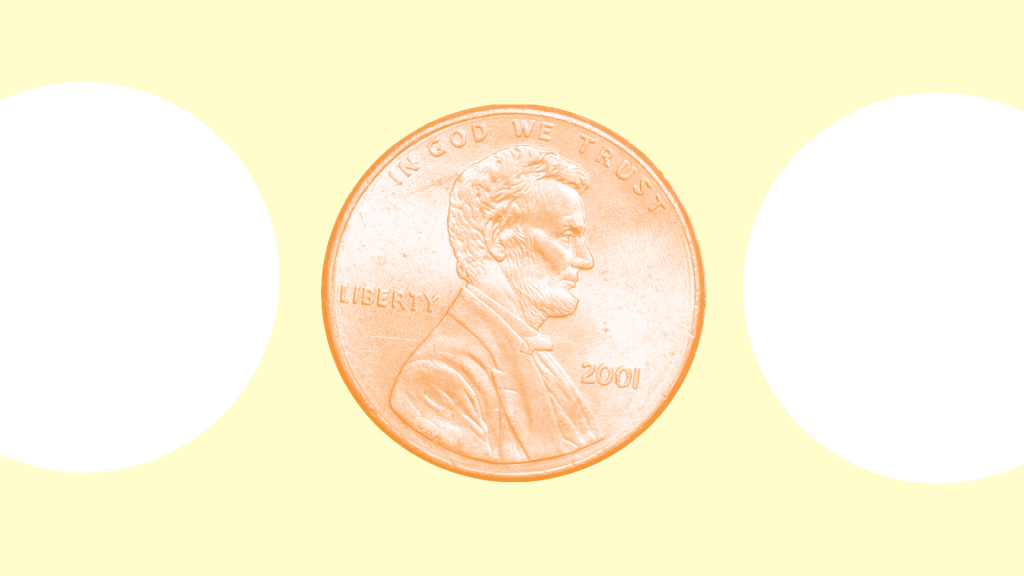
The United States minted its final penny in Philadelphia in November 2025, a conclusion to a 232-year chapter that began with the Coinage Act of 1792 and the first copper cents issued the following year. As the American penny enters a long afterlife in purses and jars, its cultural imprint lives on through expressions that were already in circulation long before the penny itself. English speakers have used the word “penny,” which is ultimately from an unknown Germanic root, as a word for a “coin” for more than a thousand years, and idioms that include it show how deeply this tiny unit of currency shaped ideas about value, thrift, and human behavior.
A penny for your thoughts, which first appeared in English in the early 16th century, is another way to say, “You’re being quiet. What’s on your mind?” The earliest widely cited example comes from Sir Thomas More in 1522, who used the phrase as a friendly prompt for someone to speak. The expression later gained wider circulation when John Heywood included it in his 1546 collection of proverbs.
A penny saved is a penny earned grew from several 17th- and 18th-century proverbs that praised thrift (e.g., “A penny spar’d is twice got.”). Benjamin Franklin helped popularize the sentiment in the 18th century, and the phrasing entered American English as advice that small acts of restraint accumulate into meaningful gain.
Turn up like a bad penny and earlier variations first appeared in the 14th century to denote a penny that was counterfeit, damaged, or poorly made but still circulated. Over time, the expression came to describe troublesome or unwelcome people who keep showing up again and again.
In for a penny, in for a pound first appeared in 17th-century Britain. The phrase means that once you start a task or commit to a goal, you should see it all the way through, even if it ends up being difficult or costly. Interestingly, when the expression crossed the Atlantic, Americans kept the British “pound” reference rather than changing it to “dollars.”
Penny-wise and pound-foolish is another idiom that retained the British “pound” when it was popularized in America. It refers to being thrifty or spending-conscious with small sums, but financially wasteful on a larger scale. This idiom and variations on it date back to the 16th century, sometimes paired with analogies conveying the same thing, such as “to save a stick and burn a house.”
Despite the penny’s rich history coming to an end, these catchy phrases are sure to remain priceless.
Penny Words
Check out these penny words that were coined along the way!
penny-farthing
noun: an old-fashioned, high-riding bike with a large wheel in front and small wheel in back
pennyroyal
noun: a type of aromatic plant in the mint family
penny-pinching
adjective: excessively careful with money
penny arcade
noun: an amusement venue with coin-operated machines and games, originally operated for a penny a play
penny dreadful
noun: a cheap, sensational novel about adventure, crime, or violence
