humor
Americannoun
-
humors
plural
-
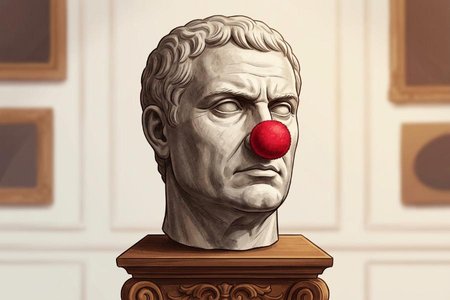
a comic, absurd, or incongruous quality causing amusement.
the humor of a situation.
-
the faculty of perceiving what is amusing or comical.
He is completely without humor.
-
an instance of being or attempting to be comical or amusing; something humorous.
The humor in his joke eluded the audience.
-
the faculty of expressing the amusing or comical.
The author's humor came across better in the book than in the movie.
-
comical writing or talk in general; comical books, skits, plays, etc.
-
humors, peculiar features; oddities; quirks.
humors of life.
-
mental disposition or temperament.
-
a temporary mood or frame of mind.
The boss is in a bad humor today.
-
a capricious or freakish inclination; whim or caprice; odd trait.
-
(in medieval physiology) one of the four elemental fluids of the body, blood, phlegm, black bile, and yellow bile, regarded as determining, by their relative proportions, a person's physical and mental constitution.
-
any animal or plant fluid, whether natural or morbid, as the blood or lymph.
verb (used with object)
-
humors,
present (3rd person singular)
-
humored,
past participle, past
-
humoring
present participle
-
to comply with the mood or desires of in order to soothe or make more content or agreeable.
Children can sense when you’re just humoring them instead of taking them seriously.
You've heard this a hundred times, but please humor me while I tell you again.
- Antonyms:
- restrain, discipline
-
to adapt or accommodate oneself to.
idioms
-
See aqueous humor
-
See vitreous humor
-
One of the four fluids of the body—blood, phlegm, black bile, and yellow bile—whose relative proportions were thought in ancient and medieval medicine to determine general health and character.
Usage
What is a basic definition of humor? Humor is the ability of something to cause amusement or laughter. Humor is also a person’s ability to find amusement or comedy in something. As a verb, humor means to comply with someone’s demands or opinions in order to soothe them. Humor has several other senses as a noun or a verb. Humor refers to something’s or someone’s ability to make people laugh or be amused. Usually, this is done by involving things that are funny or absurd. For example, a cartoon’s humor may involve slapstick comedy or characters doing ridiculous things as part of a wacky scheme. The word humor may also refer to a specific attempt at being funny. If something successfully uses humor, it is considered to be humorous.
- Real-life examples: Cartoons, jokes, pranks, standup comedy, and funny movies are all examples of things that attempt to use humor to entertain people.
- Used in a sentence: We laughed when my dad accidentally opened the gift meant for the dog, but he failed to see the humor in the situation.
- Real-life examples: A person who is full of humor laughs at almost anything and is easily amused. A person with no sense of humor seems to rarely laugh or smile. Someone who finds offensive or shameful things funny is said to have a bad or poor sense of humor.
- Used in a sentence: My friend has no sense of humor and never laughs at any of my funny jokes.
-
Used in a sentence: I know you think my ideas are really stupid, but just humor me for a second.
Synonym Usage
Humor, wit refer to an ability to perceive and express a sense of the clever or amusing. Humor consists principally in the recognition and expression of incongruities or peculiarities present in a situation or character. It is frequently used to illustrate some fundamental absurdity in human nature or conduct, and is generally thought of as more kindly than wit: a genial and mellow type of humor; his biting wit. Wit is a purely intellectual manifestation of cleverness and quickness of apprehension in discovering apparent analogies between things really unlike, and expressing them in brief, diverting, and often sharp observations or remarks. Humor, gratify, indulge imply attempting to satisfy the wishes or whims of (oneself or others). To humor is to comply with a mood, fancy, or caprice, as in order to satisfy, soothe, or manage: to humor an invalid. To gratify is to please by satisfying the likings or desires: to gratify someone by praising him. Indulge suggests a yielding to wishes that perhaps should not be given in to: to indulge an unreasonable demand; to indulge an irresponsible son.
Word History
Doctors in ancient times and in the Middle Ages thought the human body contained a mixture of four substances, called humors, that determined a person's health and character. The humors were fluids (humor means “fluid” in Latin), and they differed from each other in being either warm or cold and moist or dry. Each humor was also associated with one of the four elements, the basic substances that made up the universe in ancient schemes of thought. Blood was the warm, moist humor associated with the element fire, and phlegm was the cold, moist humor associated with water. Black bile was the cold, dry humor associated with the earth, and yellow bile was the warm, dry humor associated with the air. Illnesses were thought to be caused by an imbalance in the humors within the body, as were defects in personality, and some medical terminology in English still reflects these outmoded concepts. For example, too much black bile was thought to make a person gloomy, and nowadays symptoms of depression such as insomnia and lack of pleasure in enjoyable activities are described as melancholic symptoms, ultimately from the Greek word melancholia, “excess of black bile,” formed from melan-, “black,” and khole, “bile.” The old term for the cold, clammy humor, phlegm, lives on today as the word for abnormally large accumulations of mucus in the upper respiratory tract. Another early name of yellow bile in English, choler, is related to the name of the disease cholera, which in earlier times denoted stomach disorders thought to be due to an imbalance of yellow bile. Both words are ultimately from the Greek word chole, “bile.”
Discover More
Physicians in the Middle Ages believed that four principal humors — blood, phlegm, yellow bile, and black bile — controlled body functions and that a person's temperament resulted from the humor that was most prevalent in the body. Sanguine people were controlled by blood, phlegmatic people by phlegm, choleric people by yellow bile (also known as “choler”), and melancholic people by black bile (also known as “melancholy”).
Other Word Forms
Derived Forms
-
humorlessnessnoun
-
prehumornoun
-
outhumorverb (used with object)
-
humorfuladjective
-
humorlessadjective
-
unhumoredadjective
-
well-humoredadjective
-
humorlesslyadverb
Inflected Forms
Nouns
Participles
Conjugated Forms
Present
-
humorsimple
-
humorssimple
-
have humoredperfect
-
has humoredperfect
-
am humoringprogressive
-
are humoringprogressive
-
is humoringprogressive
-
have been humoringperfect progressive
-
has been humoringperfect progressive
Past
-
humoredsimple
-
had humoredperfect
-
was humoringprogressive
-
were humoringprogressive
-
had been humoringperfect progressive
Future
Etymology
Origin of humor
First recorded in 1300–50; Middle English (h)umour, from Anglo-French, from Latin (h)ūmōr- (stem of (h)ūmor ) “moisture, fluid” (medical Latin: “body fluid”), equivalent to (h)ūm(ēre) “to be wet” ( see humid) + -ōr- -or 1
Explanation

Humor is a word for the quality of being funny — or for appreciating comedy, as in "sense of humor." Many movies and TV shows — comedies — are full of humor, but there might be humor in any show or even any situation. Since different people find different things funny, there are many different senses of humor and types of humor. Some like wordplay, while others might enjoy slapstick. If you're in good humor, you're in a good mood. The humors are also the liquid parts of the body (you might remember that because many people find bodily fluids humorous).
Vocabulary lists containing humor
Journalism
Looking to grow your vocabulary? Check out this interactive, curated word list from our team of English language specialists at Vocabulary.com – one of over 17,000 lists we've built to help learners worldwide!
"The Tragedy of Romeo and Juliet," Vocabulary from Act 4
Interested in learning more words like this one? Our team at Vocabulary.com has got you covered! You can review flashcards, quiz yourself, practice spelling, and more – and it's all completely free to use!
Words Whose Pronunciation Has Changed Over Time
Want to remember this word for good? Start your learning journey today with our library of interactive, themed word lists built by the experts at Vocabulary.com – we'll help you make the most of your study time!
Example Sentences
Examples are provided to illustrate real-world usage of words in context. Any opinions expressed do not reflect the views of Dictionary.com.
See Examples For:
Come for my colleagues’ smart insights about the midterms, stay for their killer senses of humor.
From Slate ● Oct. 29, 2026

She described his "ability to rouse the crowd" and "sense of humor, which he's turned on Trump."
From Barron's ● Oct. 29, 2026

He catalogs these versions of the story with cheeky humor, in a tone that doesn’t line up with his oft-asserted love of all things spooky.
From The Wall Street Journal ● Oct. 28, 2026

“Detectorists” and “Small Prophets” share a singular comedic sensibility, which arose from Crook’s realization that some shows at that time, like “The Office” or “The Inbetweeners,” were drawing humor from cruelty, embarrassment and awkwardness.
From Los Angeles Times ● Oct. 28, 2026

All traces of humor and mischief have evaporated from her eyes, revealing the same intense look that Ma must have inherited.
From "Kwame Crashes the Underworld" by Craig Kofi Farmer

Health was a state of equilibrium, according to this view, a precarious balance among the body’s four humors.
From The Wall Street Journal ● Jan. 23, 2026
They thought their health was all about the balancing of bodily humors.
From Slate ● May 8, 2024
Sure, it would take until the 19th century for the germ theory of disease to overtake the concept of humors and “miasmas” that could damage human health.
From National Geographic ● May 25, 2023

The theory of bodily humors has long since been discredited and discarded.
From Washington Post ● Nov. 7, 2022
This concept stated that good health resulted when body fluids, called humors, were in balance.
From "An American Plague: The True and Terrifying Story of the Yellow Fever Epidemic of 1793" by Jim Murphy
He is hired as an intern by a phony physician whose reputation is founded on knowledge of “a certain professional slang, humored by a medical face.”
From The Wall Street Journal ● Feb. 9, 2026
If I was lucky, Dad humored me and would say, Davon, I’ll show you.
From Slate ● Jul. 29, 2023
She humored him, and read all the way through Page 1 and moved onto Page 2 before DeHovitz stopped her.
From New York Times ● May 9, 2023
I humored her harrumphs when my best friend and I waited in line for hours to see the second batch in the late 1990s.
From Los Angeles Times ● Dec. 7, 2022
The Etheringtons mostly humored him, it seemed to Ishmael—for them he was a colorful island character, part of the charm of the place.
From "Snow Falling on Cedars: A Novel" by David Guterson
The tail-wagging golden retrievers and teens humoring their parents cleared out of the way.
From Seattle Times ● Dec. 1, 2023
As I have grown older, I have come to realize he wasn’t being humored by me as much as he was humoring me.
From Los Angeles Times ● Aug. 3, 2022
Over the time I’ve interviewed Franco A., senior defense officials have gone from humoring my queries about extremist networks to publicly sounding the alarm.
From New York Times ● Dec. 29, 2020
If you are communicating to him in any way that you’re humoring him, I believe this is a serious misstep.
From Slate ● Feb. 16, 2020
"We can check," he says, but he's just humoring me.
From "The Hunger Games" by Suzanne Collins
Random Word
Spin the wheel and learn a new word!
Get a wordDefinitions and idiom definitions from Dictionary.com Unabridged, based on the Random House Unabridged Dictionary, © Random House, Inc. 2023
Idioms from The American Heritage® Idioms Dictionary copyright © 2002, 2001, 1995 by Houghton Mifflin Harcourt Publishing Company. Published by Houghton Mifflin Harcourt Publishing Company.
