
majuscule
Americanadjective
-
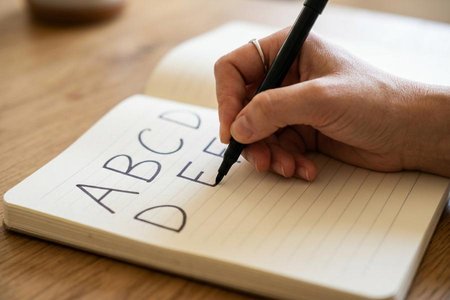
(of letters) capital.
-
large, as either capital or uncial letters.
-
written in such letters (opposed to minuscule).
noun
noun
adjective
Other Word Forms
Etymology
Origin of majuscule
1720–30; < Latin majuscula ( littera ) a somewhat bigger (letter), equivalent to majus-, stem of major major + -cula -cule 1
Explanation

A majuscule is just a capital letter — or a term for large script in which every letter is the same height. Now you know what your friend meant when she told you to write your lemonade stand sign in majuscule. The term majuscule was originally used in the 18th century for an uppercase letter, from the Latin maiusculus, "somewhat larger," a close relative of major. Its antonym, minuscule, is much more commonly used today. You can feel free to impress your friends by using it for capital letters: "I wrote my whole essay using majuscule to make it look more impressive."
Example Sentences
Examples are provided to illustrate real-world usage of words in context. Any opinions expressed do not reflect the views of Dictionary.com.
We sound all-lowercase depths and perform shrill majuscule runs, piling on exclamation points, upspeak-y question marks, and other gracenotes instead of tapping out a staid Strunkian rhythm.
From Slate ● Sep. 30, 2016

In the Vatican Library there is a codex of the New Testament, neatly written on parchment in majuscule, parts of which the present writer has collated with the printed text.
From A Plain Introduction to the Criticism of the New Testament, Vol. II. by Frederick Henry Ambrose Scrivener

Uncial, un′shal, adj. applied to that variety of majuscule writing, with large round characters, used in ancient MSS.—n. an uncial letter, uncial writing: a MS. written in uncials.—v.t.
From Chambers's Twentieth Century Dictionary (part 4 of 4: S-Z and supplements) by Various
The character is that called ecclesiastical or priestly majuscule, which differs wholly from the civil characters and can, as a rule, be read by the priests only.
From A Plain Introduction to the Criticism of the New Testament, Vol. II. by Frederick Henry Ambrose Scrivener
Random Word
Spin the wheel and learn a new word!
Get a wordDefinitions and idiom definitions from Dictionary.com Unabridged, based on the Random House Unabridged Dictionary, © Random House, Inc. 2023
Idioms from The American Heritage® Idioms Dictionary copyright © 2002, 2001, 1995 by Houghton Mifflin Harcourt Publishing Company. Published by Houghton Mifflin Harcourt Publishing Company.
