transparency
Americannoun
-
transparencies
plural
-
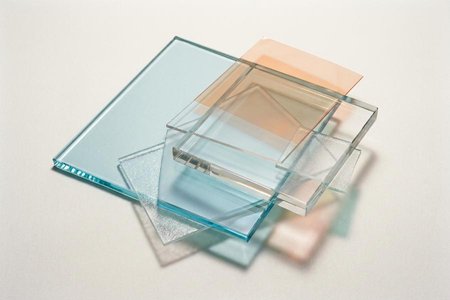
Also transparence. the quality or state of being transparent.
-
something transparent, especially a picture, design, or the like on glass or some translucent substance, made visible by light shining through from behind.
-
Photography.
-
the proportion of the light that is passed through the emulsion on an area of a photographic image.
-
a photographic print on a clear base for viewing by transmitted light.
-
noun
-
Also called: transparence. the state of being transparent
-
Also called: slide. a positive photograph on a transparent base, usually mounted in a frame or between glass plates. It can be viewed by means of a slide projector
Usage
What does transparency mean? Transparency is the quality or state of being transparent. It is perhaps most commonly used in a figurative way to refer to a state in which things are free from any attempt to hide something, as in The administration has been praised for its transparency with the press. It can also be used to mean a state in which something is literally transparent—able to be seen through or allowing light to pass through clearly. A clear glass window is transparent in this way. However, something doesn’t need to be completely clear to be considered transparent. A fine mesh that is able to be seen through could be described as transparent. The word translucence (the noun form of the adjective translucent) is sometimes used as a synonym for transparency. In technical contexts, though, describing something as translucent means that it allows light to pass through but diffuses it so that whatever is on the other side cannot be fully seen. For example, a frosted glass window could be said to be translucent but not transparent (you can see what’s on the other side, but not clearly). Still, in everyday conversation, these literal senses of the words are typically used to mean the same thing. Another figurative sense of transparency refers to the state of being obvious or easy to understand or figure out, as in I always appreciate transparency in instructions—the simpler the better. Transparency can also refer to something that is transparent. More specifically, it’s used to refer to a clear sheet (also called a slide) featuring an image that can be projected through the use of a slide projector. Example: Consumer advocates have been pushing the company to increase transparency around its supply chain.
Other Word Forms
Derived Forms
Inflected Forms
Nouns
Etymology
Origin of transparency
From the Medieval Latin word trānspārentia, dating back to 1585–95. See transparent, -ency
Explanation

The condition of being clear or transparent is transparency. The transparency of your car's windshield might be affected by how badly your car needs to be washed. Something has transparency if you can see through it, like the ice on the top of a frozen lake or a glass. Transparency can also refer to a figurative kind of clearness or openness, which is what people mean when they talk about "government transparency." If you can see clearly, without anything being hidden, what you're looking at (or through) has transparency. Its root is the Latin word transparentem, which means "see light through."
Vocabulary lists containing transparency
Rocks and Minerals - Introductory
Looking to grow your vocabulary? Check out this interactive, curated word list from our team of English language specialists at Vocabulary.com – one of over 17,000 lists we've built to help learners worldwide!
What to the Slave is the Fourth of July?
Interested in learning more words like this one? Our team at Vocabulary.com has got you covered! You can review flashcards, quiz yourself, practice spelling, and more – and it's all completely free to use!
This Week in Words: June 22–28, 2019
Want to remember this word for good? Start your learning journey today with our library of interactive, themed word lists built by the experts at Vocabulary.com – we'll help you make the most of your study time!
Example Sentences
Examples are provided to illustrate real-world usage of words in context. Any opinions expressed do not reflect the views of Dictionary.com.
See Examples For:
“Without collaboration and transparency, management of this complex issue will continue to falter, and worse, our unhoused neighbors will continue to suffer,” the statement said.
From Los Angeles Times ● Oct. 10, 2026

ETFs are traded throughout the day, but transparency does not equate to volatility.
From MarketWatch ● Oct. 9, 2026

Free cash flow isn’t all it appears to be, and investors need a lot more transparency on the cash-flow statement than they’re getting now.
From The Wall Street Journal ● Oct. 9, 2026

As for concerns about why there might be plague in a test tube in Siberia: the lack of transparency from Russia is worrying for biosecurity experts.
From Slate ● Oct. 8, 2026

There’s an edge of transparency, and beside it a rim of solid flesh that’s without feeling, like a scar.
From "Cat's Eye" by Margaret Atwood

Vermont declines, though, to say how much market share his company has in aircraft windows – or transparencies, as they are known in the trade.
From BBC ● Sep. 15, 2026

Among them facsimiles of relevant ephemera are bound in mismatching formats: foldout drawings, transparencies, die-cuttings and pamphlets whose archival relevance you must flip through to ascertain.
From New York Times ● Jan. 16, 2024

There are also more than 70,000 pictures, prints, slides, negatives, large format transparencies and contact sheets taken by famed photographers including Terry O’Neill and Helmut Newton.
From Reuters ● Feb. 23, 2023
MTT’s was a series of overlain transparencies showing the electron shells of one of the higher elements, perhaps uranium.
From Los Angeles Times ● Jan. 23, 2023
He had made transparencies of the letters from Dr. Barnes and put them on the overhead projector so the whole class could see them while he explained what was happening.
From "The Landry News" by Andrew Clements
Definitions and idiom definitions from Dictionary.com Unabridged, based on the Random House Unabridged Dictionary, © Random House, Inc. 2023
Idioms from The American Heritage® Idioms Dictionary copyright © 2002, 2001, 1995 by Houghton Mifflin Harcourt Publishing Company. Published by Houghton Mifflin Harcourt Publishing Company.
