precipitate
Americanverb (used with object)
-
precipitates,
present (3rd person singular)
-
precipitated,
past participle, past
-
precipitating
present participle
-
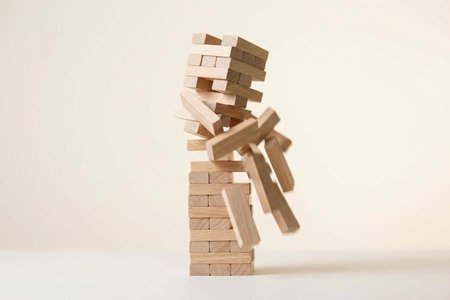
to hasten the occurrence of; bring about prematurely, hastily, or suddenly.
to precipitate an international crisis.
- Synonyms:
- accelerate
- Antonyms:
- retard
-
to cast down headlong; fling or hurl down.
-
to cast, plunge, or send, especially violently or abruptly.
He precipitated himself into the struggle.
-
Chemistry. to separate (a substance) in solid form from a solution, as by means of a reagent.
- Synonyms:
- crystallize
verb (used without object)
-
precipitates,
present (3rd person singular)
-
precipitated,
past participle, past
-
precipitating
present participle
-
Meteorology. to fall to the earth's surface as a condensed form of water; to rain, snow, hail, drizzle, etc.
-
to separate from a solution as a precipitate.
-
to be cast or thrown down headlong.
adjective
-
a precipitate fall down the stairs.
-
rushing headlong or rapidly onward.
-
proceeding rapidly or with great haste.
a precipitate retreat.
-
exceedingly sudden or abrupt.
a precipitate stop; a precipitate decision.
-
done or made without sufficient deliberation; overhasty; rash.
a precipitate marriage.
- Antonyms:
- careful
noun
-
precipitates
plural
-
Chemistry. a substance precipitated from a solution.
-
moisture condensed in the form of rain, snow, etc.
verb
-
(tr) to cause to happen too soon or sooner than expected; bring on
-
to throw or fall from or as from a height
-
to cause (moisture) to condense and fall as snow, rain, etc, or (of moisture, rain, etc) to condense and fall thus
-
chem to undergo or cause to undergo a process in which a dissolved substance separates from solution as a fine suspension of solid particles
adjective
-
rushing ahead
-
done rashly or with undue haste
-
sudden and brief
noun
-
To fall from the atmosphere as rain, snow, or another form of precipitation.
-
To separate as a solid from a solution in chemical precipitation.
Other Word Forms
Derived Forms
-
precipitabilitynoun
-
precipitatenessnoun
-
precipitatornoun
-
unprecipitatenessnoun
-
nonprecipitativeadjective
-
precipitableadjective
-
precipitativeadjective
-
unprecipitateadjective
-
unprecipitativeadjective
-
precipitatelyadverb
-
unprecipitatelyadverb
-
unprecipitativelyadverb
Inflected Forms
Nouns
Participles
Conjugated Forms
Present
-
precipitatesimple
-
precipitatessimple
-
have precipitatedperfect
-
has precipitatedperfect
-
am precipitatingprogressive
-
are precipitatingprogressive
-
is precipitatingprogressive
-
have been precipitatingperfect progressive
-
has been precipitatingperfect progressive
Past
-
precipitatedsimple
-
had precipitatedperfect
-
was precipitatingprogressive
-
were precipitatingprogressive
-
had been precipitatingperfect progressive
Future
Etymology
Origin of precipitate
First recorded in 1520–30; the verb and adjective derive from Latin praecipitātus (past participle of praecipitāre “to cast down headlong”), equivalent to praecipit- (stem of praeceps “steep”; see precipice) + -ātus past participle suffix ( see -ate 1); the noun comes from New Latin praecipitātum “a precipitate,” noun use of neuter of praecipitātus
Explanation

Precipitate usually means "bringing something on" or "making it happen" — and not always in a good way. An unpopular verdict might "precipitate violence" or one false step at the Grand Canyon could precipitate you down into the gorge. Precipitate, as a verb, can also mean specifically, "to fall from clouds," such as rain, snow, or other forms of precipitation. When used as an adjective, precipitate means "hasty" or "acting suddenly." If you decide to throw your class project in a trash masher just because someone in your class had a similar idea, then your actions might be described as precipitate. Or if you do that sort of thing regularly, you may be a precipitate person.
Vocabulary lists containing precipitate
"Letter from Birmingham Jail" by Martin Luther King, Jr. (1963)
Looking to grow your vocabulary? Check out this interactive, curated word list from our team of English language specialists at Vocabulary.com – one of over 17,000 lists we've built to help learners worldwide!
Essential Academic Vocabulary for High School Students, List 4
Interested in learning more words like this one? Our team at Vocabulary.com has got you covered! You can review flashcards, quiz yourself, practice spelling, and more – and it's all completely free to use!
The SAT: Multiple-Meaning Words, List 7
Want to remember this word for good? Start your learning journey today with our library of interactive, themed word lists built by the experts at Vocabulary.com – we'll help you make the most of your study time!
Example Sentences
Examples are provided to illustrate real-world usage of words in context. Any opinions expressed do not reflect the views of Dictionary.com.
See Examples For:
Servaas Storm, an economist closely following the AI sector at the Delft University of Technology, said the industry is already facing severe financial headwinds that could precipitate a panic.
From Los Angeles Times ● Oct. 25, 2026

Highly concentrated brines can keep phosphate dissolved in solution and can promote chemical reactions involving organic compounds and minerals that precipitate from solution.
From Science Daily ● Aug. 8, 2026

Critics have also insisted that the deal could precipitate a nuclear race in a region already battered by war.
From Barron's ● Jul. 23, 2026

He’s credited with calling not just the spike in oil prices that helped precipitate the global financial crisis of 2007-2009, but also the oil glut that followed over the next decade.
From MarketWatch ● May 15, 2026

The added depressive effect of the organic phosphate may then be enough to precipitate acute symptoms.
From "Silent Spring" by Rachel Carson

“I think what the Iran war basically does is it precipitates things like these, and it presents opportunities for some of the groups on the ground,” she said.
From The Wall Street Journal ● Sep. 14, 2026

Longer cooling times allow precipitates to grow larger, which reduces strength.
From Science Daily ● Dec. 29, 2025
Around 45-50 degrees Fahrenheit, the natural wax particles in olive oil precipitates out of the oil, thus making it appear crystallized, explained olive oil retailer Brightland.
From Salon ● Apr. 20, 2024

"In rocks, what happens is quartz grains dissolve at stressed contacts and the dissolved material moves to cracks where it precipitates."
From Science Daily ● Feb. 7, 2024
In Jane Austen novels, a death often precipitates the loss of a fortune, which propels the heroine to seek a husband.
From "Charles and Emma: The Darwins' Leap of Faith" by Deborah Heiligman
There are several factors which precipitated what many see as the downfall of Forest City.
From BBC ● Aug. 11, 2026

The transaction, while small at just 32 bitcoin, hurt investor confidence and precipitated a swift market pullback.
From The Wall Street Journal ● Jun. 30, 2026
The Mississippi letter references a local judge, Carlos Palmer, who told The Times that he couldn’t recall what precipitated Gideon’s missive.
From Los Angeles Times ● Jun. 25, 2026
Production ended on July 27, 1990 at a factory in Portugal, precipitated by tightening emission standards in Europe.
From Barron's ● May 21, 2026
He had no idea what had precipitated this, but it was at least a question he could answer.
From "We'll Fly Away" by Bryan Bliss
The book opens shortly after its precipitating event.
From Los Angeles Times ● Sep. 8, 2026
And the precipitating event for Trump’s change appears to have been a question-and-answer session with Louisiana Sen. John Kennedy in a Senate hearing this week.
From Slate ● Mar. 5, 2026

That’s an omission bank industry groups saw as a loophole, precipitating the current fight over the Clarity Act.
From The Wall Street Journal ● Jan. 30, 2026
Maybe there will be no precipitating incident, no crackdown, no threat to America’s First Amendment tradition.
From Salon ● May 30, 2024
Yet Milagro was a town whose citizens had a penchant not only for going crazy, but also for precipitating miracles.
From "The Milagro Beanfield War" by John Nichols
Random Word
Spin the wheel and learn a new word!
Get a wordDefinitions and idiom definitions from Dictionary.com Unabridged, based on the Random House Unabridged Dictionary, © Random House, Inc. 2023
Idioms from The American Heritage® Idioms Dictionary copyright © 2002, 2001, 1995 by Houghton Mifflin Harcourt Publishing Company. Published by Houghton Mifflin Harcourt Publishing Company.
