noun
-
the act of deceiving or the state of being deceived
-
something that deceives; trick
Usage
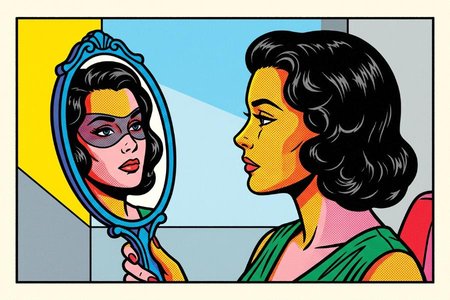
What does deception mean? Deception is the act or practice of deceiving—lying, misleading, or otherwise hiding or distorting the truth. The related word deceit often means the same thing. Deception doesn’t just involve lying. It can consist of misrepresenting or omitting the truth or more complicated cover-ups. Anything that involves intentionally misleading someone is deception. People can even engage in self-deception by avoiding the truth. The word deception often implies a pattern of behavior, rather than a one-time act. The adjective deceptive can describe something that deceives or is intended to deceive. A person who engages in deception can be described as deceitful. Less commonly, the word deception can refer to an action, scheme, or trick intended to deceive, as in It was a clever deception, but I didn’t fall for it. Example: I’m sick of your constant lying and deception—I can’t trust anything you say!
Other Word Forms
Derived Forms
Inflected Forms
Nouns
Etymology
Origin of deception
First recorded in 1400–50; late Middle English decepcioun, from Old French, from Late Latin dēceptiōn-, stem of dēceptiō “deceitfulness,” from Latin dēcept(us) “deceived” (past participle of dēcipere; see deceive) + -iō -ion
Explanation

Deception is a trick or scheme used to get what you want, like the deception you used to get your sister to agree to do all your chores for a month. Deception occurs when you deceive, a word that comes from the Latin de- meaning "from" and capere, meaning "to take." When you deceive someone, the result may be taking — like items you don't really need from people willing to give them, believing they are helping you. You may have heard the phrase "take someone for a ride." That's a way of describing deception.
Vocabulary lists containing deception
A Web of Lies
Looking to grow your vocabulary? Check out this interactive, curated word list from our team of English language specialists at Vocabulary.com – one of over 17,000 lists we've built to help learners worldwide!
"The Crucible" -- Vocabulary from all 4 Acts
Interested in learning more words like this one? Our team at Vocabulary.com has got you covered! You can review flashcards, quiz yourself, practice spelling, and more – and it's all completely free to use!
Smoke and Mirrors: The Lingo of Illusion and Deception
Want to remember this word for good? Start your learning journey today with our library of interactive, themed word lists built by the experts at Vocabulary.com – we'll help you make the most of your study time!
Example Sentences
Examples are provided to illustrate real-world usage of words in context. Any opinions expressed do not reflect the views of Dictionary.com.
See Examples For:
The production was announced in March this year as a "rambunctious comedy of deception and disguise inspired by the grand swashbuckling epics of stage and screen".
From BBC ● Oct. 11, 2026

"This was sustained, deliberate deception that concealed neglect from families and professionals alike," one parent told the BBC.
From BBC ● Oct. 7, 2026
It said the ruling recognised that the commission, Campbell and others had been "subject to sophisticated deception".
From Barron's ● Oct. 1, 2026

Specifically, GPT-6.1 Astra showed higher levels of deception: It wasn’t always honest about telling users of the actions it did or didn’t take.
From The Wall Street Journal ● Sep. 28, 2026

The man’s full-teeth welcome smile remained frozen in place, but the room had flooded with the bitter scent of deception as he answered her.
From "Pax" by Sara Pennypacker

After his father’s death, Mr. Junod goes on a sort of genealogical quest, excavating Lou’s double and triple lives—mistresses, deceptions, suspicious deaths, ugly secrets—and more distant family history.
From The Wall Street Journal ● Mar. 5, 2026
How can anyone trust evidence produced by people who openly brag about their digital deceptions?
From Salon ● Jan. 24, 2026

From small social excuses to deliberate deceptions, lying is something most of us do, often without stopping to think about why.
From BBC ● Jan. 13, 2026
Mild lies of omission are forgivable, while "sticky" mid-range deceptions can often be resolved with support and kindness.
From BBC ● Jan. 13, 2026
Faeries make up for their inability to lie with a panoply of deceptions and cruelties.
From "The Cruel Prince" by Holly Black
Random Word
Spin the wheel and learn a new word!
Get a wordDefinitions and idiom definitions from Dictionary.com Unabridged, based on the Random House Unabridged Dictionary, © Random House, Inc. 2023
Idioms from The American Heritage® Idioms Dictionary copyright © 2002, 2001, 1995 by Houghton Mifflin Harcourt Publishing Company. Published by Houghton Mifflin Harcourt Publishing Company.
