amendment
Americannoun
-
amendments
plural
-
-
an alteration of or addition to a motion, bill, constitution, etc.
-
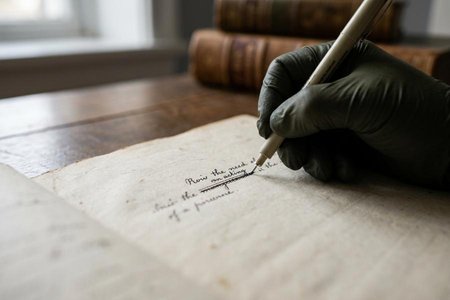
a change made by correction, addition, or deletion.
The editors made few amendments to the manuscript.
-
Horticulture. a soil-conditioning substance that promotes plant growth indirectly by improving such soil qualities as porosity, moisture retention, and pH balance.
noun
-
the act of amending; correction
-
an addition, alteration, or improvement to a motion, document, etc
Other Word Forms
Derived Forms
Inflected Forms
Nouns
Etymology
Origin of amendment
First recorded in 1250–1300; Middle English word from Old French word amendement. See amend, -ment
Explanation

An amendment is a change made to an original, usually a document or statement. You might propose an amendment to your environmental club's bylaws requiring that all official club documents be printed on recycled paper. Can you spot the word amend, meaning "to make better" or "to cure of faults and errors," hidden in amendment? If so, you'll grasp the notion that an amendment is something intended to improve whatever preceded it. It pops up most often in formal legal contexts, where it refers to a written change to a bill, law, contract, or the U.S. Constitution.
Vocabulary lists containing amendment
U.S. Government Lingo
Looking to grow your vocabulary? Check out this interactive, curated word list from our team of English language specialists at Vocabulary.com – one of over 17,000 lists we've built to help learners worldwide!
American History I
Interested in learning more words like this one? Our team at Vocabulary.com has got you covered! You can review flashcards, quiz yourself, practice spelling, and more – and it's all completely free to use!
13th Amendment (1865)
Want to remember this word for good? Start your learning journey today with our library of interactive, themed word lists built by the experts at Vocabulary.com – we'll help you make the most of your study time!
Example Sentences
Examples are provided to illustrate real-world usage of words in context. Any opinions expressed do not reflect the views of Dictionary.com.
See Examples For:
As part of its vote, the council also approved an amendment introduced by Councilmember Adrin Nazarian recommending the city attorney assess potential legal liabilities for mandating in-person training requirements.
From Los Angeles Times ● Sep. 8, 2026

The amendment provides a process for the vice president and a majority of the Cabinet to declare a president unable to discharge the duties of the office.
From Salon ● Sep. 7, 2026

In Harris County, a proposed Flock contract amendment initially included the explicit authorisation to share camera data with federal law enforcement, but this provision was later removed after push-back from campaigners.
From BBC ● Sep. 5, 2026

Passing an amendment takes a two-thirds majority as a first step.
From The Wall Street Journal ● Sep. 4, 2026

After receiving a telegram from President Woodrow Wilson urging him to support the amendment, he agreed to call a special legislative session, but he planned to wait until August, after the state’s Democratic party primary.
From "Votes for Women!" by Winifred Conkling

The 1964 amendments expanded the board’s duties to include providing “a suitable memorial in honor of the late president.”
From The Wall Street Journal ● Sep. 22, 2026
Congress in 2019 enacted amendments reiterating that the center’s mission is to serve as a center for the performing arts and as a “national memorial to President John F. Kennedy.”
From The Wall Street Journal ● Sep. 22, 2026
But it ran out of time to progress through all the necessary stages in Parliament after some peers in the House of Lords tabled more than 1,200 amendments.
From BBC ● Sep. 11, 2026
According to the indictment, the state Constitution provides “a means for citizens to bypass the state legislature and enact statutes and constitutional amendments directly through the initiative process.”
From Los Angeles Times ● Sep. 10, 2026
But in the end, history is not just about wars and constitutional amendments, facts we memorize.
From "In the Shadow of Liberty" by Kenneth C. Davis
Definitions and idiom definitions from Dictionary.com Unabridged, based on the Random House Unabridged Dictionary, © Random House, Inc. 2023
Idioms from The American Heritage® Idioms Dictionary copyright © 2002, 2001, 1995 by Houghton Mifflin Harcourt Publishing Company. Published by Houghton Mifflin Harcourt Publishing Company.
