dictionary
Americannoun
-
dictionaries
plural
-
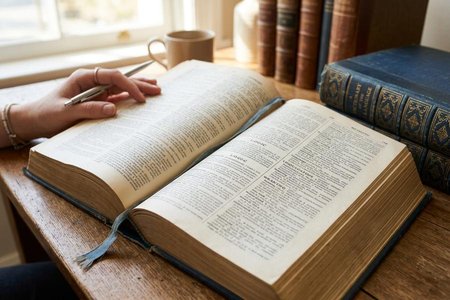
a book or digital resource (such as Dictionary.com) containing a selection of words and information about their meanings, pronunciations, etymologies, inflected forms, derived forms, etc., in either the same or another language; lexicon; glossary.
an unabridged dictionary of English;
a Japanese–English dictionary.
-
a book or digital resource giving information on a particular subject or on a particular class of words, names, or facts, usually arranged alphabetically.
a biographical dictionary;
a dictionary of mathematics.
-
Computers.
-
a list of codes, terms, keys, etc., and their meanings, used by a computer program or system.
-
a selection of words used by a piece of software, such as a word-processing program, to check the spelling of text entered.
-
noun
-
-
a reference resource, in printed or electronic form, that consists of an alphabetical list of words with their meanings and parts of speech, and often a guide to accepted pronunciation and syllabification, irregular inflections of words, derived words of different parts of speech, and etymologies
-
a similar reference work giving equivalent words in two or more languages. Such dictionaries often consist of two or more parts, in each of which the alphabetical list is given in a different language
a German-English dictionary
-
( as modifier ) See also glossary lexicon thesaurus
a dictionary definition
-
-
a reference publication listing words or terms of a particular subject or activity, giving information about their meanings and other attributes
a dictionary of gardening
-
a collection of information or examples with the entries alphabetically arranged
a dictionary of quotations
Other Word Forms
Noun Inflected Forms
Etymology
Origin of dictionary
First recorded in 1570–80; from Medieval Latin dictiōnārium, dictiōnārius, from Late Latin dictiōn- stem of dictiō “word” + -ārium, -ārius adjective and noun suffix; see diction ( def. ), -ary ( def. )
Explanation

A dictionary is a collection of words and their definitions (and sometimes other information). Such collections are usually printed as books, but some are now designed for use on computers. Dictionary originally came from the Latin word dictionarius, meaning "a manual or book of words." A dictionary is most commonly used to look up the definitions of particular words, but other information, such as etymology and usage guidelines, often appears as well. Electronic dictionaries can include even more information, like slang and popular texting acronyms, such as "ttyn," which stands for "talk to you never."
Vocabulary lists containing dictionary
TEKS ELAR Academic Vocabulary List (5th-7th grades)
Looking to grow your vocabulary? Check out this interactive, curated word list from our team of English language specialists at Vocabulary.com – one of over 17,000 lists we've built to help learners worldwide!
You Can Say That Again: Dic and Dict
Interested in learning more words like this one? Our team at Vocabulary.com has got you covered! You can review flashcards, quiz yourself, practice spelling, and more – and it's all completely free to use!
Dictionary Words: Lexicography Lingo
Want to remember this word for good? Start your learning journey today with our library of interactive, themed word lists built by the experts at Vocabulary.com – we'll help you make the most of your study time!
Example Sentences
Examples are provided to illustrate real-world usage of words in context. Any opinions expressed do not reflect the views of Dictionary.com.
See Examples For:
Similarly, in Sweden a new word for "hymen" was added in the academic dictionary after a 2009 campaign.
From BBC ● Sep. 23, 2026

“And I’ve always said the most important word in any dictionary around the world is the word ‘freedom.’”
From Los Angeles Times ● Jun. 12, 2026

Lawyers also dug up archaic legal tracts and 19th century dictionary entries defining the word “election.”
From The Wall Street Journal ● Jun. 10, 2026

To consider the word, I looked up its definition in Salon’s dictionary of choice.
From Salon ● Jun. 3, 2026

Nat wished he had had a grammar and dictionary of their language, too.
From "Carry On, Mr. Bowditch" by Jean Lee Latham

These contemporaneous dictionaries and historical cases did not materialize for the first time in the court’s opinion.
From Slate ● Jun. 3, 2026

Middle age enrichment included income level at age 40, access to resources such as magazine subscriptions, dictionaries, and library cards, and how often participants visited places like museums or libraries.
From Science Daily ● Apr. 15, 2026

The four books, which were immediately withdrawn from sale, are subject to a recall procedure and will be destroyed, Hachette said, promising a "thorough review of its textbooks, educational materials and dictionaries".
From Barron's ● Jan. 16, 2026

I would venture that this is how many people think about print dictionaries: as battered, well-traveled relics that they like to have around, or at least would feel guilty about throwing away.
From The Wall Street Journal ● Dec. 19, 2025
There were racks of almanacs, nature books, world records books, old encyclopedias, and dictionaries.
From "The Landry News" by Andrew Clements
Random Word
Spin the wheel and learn a new word!
Get a wordDefinitions and idiom definitions from Dictionary.com Unabridged, based on the Random House Unabridged Dictionary, © Random House, Inc. 2023
Idioms from The American Heritage® Idioms Dictionary copyright © 2002, 2001, 1995 by Houghton Mifflin Harcourt Publishing Company. Published by Houghton Mifflin Harcourt Publishing Company.
