privilege
Americannoun
-
privileges
plural
-
-
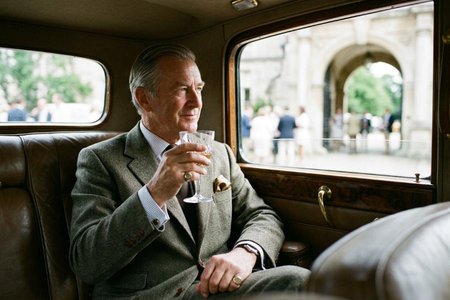
a right, immunity, or benefit enjoyed by a particular person or a restricted group of people beyond the advantages of most.
Few people have access to the privileges of the very rich.
-
the unearned and mostly unacknowledged societal advantage that a restricted group of people has over another group: male privilege;
white privilege based on skin color;
male privilege;
children of privilege.
-
-
a special right, immunity, or exemption granted to persons in authority or office to free them from certain obligations or liabilities.
It's a privilege of a senator to speak in Congress without danger of a libel suit.
-
a grant to an individual, corporation, etc., of a special right or immunity, under certain conditions.
-
the principle or condition of enjoying special rights or immunities.
-
any of the rights common to all citizens under a modern constitutional government.
We enjoy the privileges of a free people.
-
an advantage or source of pleasure granted to a person.
It's my privilege to be here.
-
Stock Exchange. an option to buy or sell stock at a stipulated price for a limited period of time, including puts, calls, spreads, and straddles.
verb (used with object)
-
privileges,
present (3rd person singular)
-
privileged,
past participle, past
-
privileging
present participle
-
to grant a privilege to.
-
to exempt (usually followed byfrom ).
-
to authorize or license (something otherwise forbidden).
noun
-
a benefit, immunity, etc, granted under certain conditions
-
the advantages and immunities enjoyed by a small usually powerful group or class, esp to the disadvantage of others
one of the obstacles to social harmony is privilege
-
any of the fundamental rights guaranteed to the citizens of a country by its constitution
-
-
the right of a lawyer to refuse to divulge information obtained in confidence from a client
-
the right claimed by any of certain other functionaries to refuse to divulge information
executive privilege
-
-
the rights and immunities enjoyed by members of most legislative bodies, such as freedom of speech, freedom from arrest in civil cases during a session, etc
-
stock exchange a speculative contract permitting its purchaser to make optional purchases or sales of securities at a specified time over a limited period of time See also call put spread straddle
verb
-
to bestow a privilege or privileges upon
-
(foll by from) to free or exempt
Usage
Spelling tips for privilege The word privilege is hard to spell for two reasons. First, it is tempting to use an e in the place of one of the two is, as in privelege. Second, people often want to add a d after the g because of the way privilege is pronounced (priviledge). How to spell privilege: It's a privilege to have two eyes (Is) and legs. This helps remind you that privilege is spelled with two is and the final syllable does not have a d.
Synonym Usage
Privilege, prerogative refer to a special advantage or right possessed by an individual or group. A privilege is a right or advantage gained by birth, social position, effort, or concession. It can have either legal or personal sanction: the privilege of paying half fare; the privilege of calling whenever one wishes. Prerogative refers to an exclusive right claimed and granted, often officially or legally, on the basis of social status, heritage, gender, etc.: the prerogatives of a king; the prerogatives of management.
Other Word Forms
Derived Forms
Inflected Forms
Nouns
Participles
Conjugated Forms
Present
-
privilegesimple
-
privilegessimple
-
have privilegedperfect
-
has privilegedperfect
-
am privilegingprogressive
-
are privilegingprogressive
-
is privilegingprogressive
-
have been privilegingperfect progressive
-
has been privilegingperfect progressive
Past
-
privilegedsimple
-
had privilegedperfect
-
was privilegingprogressive
-
were privilegingprogressive
-
had been privilegingperfect progressive
Future
Etymology
Origin of privilege
First recorded in 1125–75; (noun) Middle English; earlier privilegie, from Old French privilege, from Latin prīvilēgium originally, “a law (for or against an individual),” equivalent to prīvi- (combining form of prīvus “one's own, private”) + lēg- ( see legal) + -ium -ium; (verb) Middle English privilegen, from Middle French privilegier, from Medieval Latin prīvilēgiāre, derivative of prīvilēgium
Explanation

A privilege is a special advantage not enjoyed by everyone. If you're very snooty, you probably don't allow just anyone the privilege of being your friend. Privilege comes from Latin privilegium, meaning a law for just one person, and means a benefit enjoyed by an individual or group beyond what's available to others. Someone wealthy come from privilege. Someone with a library card has borrowing privileges. Privilege can also be used as a verb. If you are on a committee giving away scholarships, you'll have to decide whether to privilege students from poor backgrounds or the students with high test scores.
Vocabulary lists containing privilege
"The Gift of the Magi" by O. Henry
Looking to grow your vocabulary? Check out this interactive, curated word list from our team of English language specialists at Vocabulary.com – one of over 17,000 lists we've built to help learners worldwide!
Bud, Not Buddy
Interested in learning more words like this one? Our team at Vocabulary.com has got you covered! You can review flashcards, quiz yourself, practice spelling, and more – and it's all completely free to use!
"To Kill a Mockingbird" by Harper Lee, Chapters 26–31
Want to remember this word for good? Start your learning journey today with our library of interactive, themed word lists built by the experts at Vocabulary.com – we'll help you make the most of your study time!
Example Sentences
Examples are provided to illustrate real-world usage of words in context. Any opinions expressed do not reflect the views of Dictionary.com.
See Examples For:
"It's such a beautiful job, it's such a privilege to do that."
From Barron's ● Oct. 9, 2026

"This club is unique, its character and the way it makes you feel, and I have a great sense of privilege that our journey together will continue," Arteta said.
From BBC ● Oct. 7, 2026

In groveling posts online, Ms. Gann affirmed she’s a pale-skin-ian, not a Palestinian, calling herself a “white woman of significant privilege and wealth” who deceived everyone.
From The Wall Street Journal ● Sep. 29, 2026

And there’s also a privilege that comes with that,” she says.
From Los Angeles Times ● Sep. 28, 2026

“Principal Peattie does not give a student who lacks the discipline to go to assigned classes the privilege of attending advanced classes.”
From "Okay for Now" by Gary D. Schmidt

Starr acknowledged it's a male-dominated field and would like female artists to have more "space in the genre" and be "allowed the same privileges".
From BBC ● Oct. 9, 2026
A Milwaukee County judge found Romo guilty of the charge and took away his driving privileges for six months.
From Los Angeles Times ● Oct. 2, 2026
This is especially risky given the inevitably increasing role machines of the state will play in allocating our rights and privileges under our increasingly elaborate welfare and legal systems.
From The Wall Street Journal ● Sep. 1, 2026
He’s working from a relatively clean slate, and experiencing all of the privileges and drawbacks that come with it.
From Salon ● Aug. 24, 2026

Nowadays I was let out on walk privileges more and more often.
From "The Bell Jar" by Sylvia Plath
It may or may not be a culture clash that pits your middle-class childhood against your husband’s privileged one.
From MarketWatch ● Oct. 7, 2026

“However, I do not want MBA to become another program where only the most financially privileged children are able to participate.”
From Los Angeles Times ● Oct. 1, 2026
We're in a very privileged position, and it's understanding that privilege and what goes along with it.
From BBC ● Sep. 20, 2026
Some students come from privileged backgrounds and weren’t asked to do many chores at home.
From The Wall Street Journal ● Sep. 14, 2026
These were the privileged passengers who would have priority boarding with the officers and wounded.
From "Salt to the Sea" by Ruta Sepetys
News aimed to avoid privileging schools with a high concentration of degrees that pay well.
From MarketWatch ● Sep. 22, 2026
The recommendations "are designed to hold our attention, and too often that means privileging provocative and extreme content because outrage drives engagement and engagement drives profit", Steven Roberts at Monash University said.
From Barron's ● Sep. 9, 2026
A psychologist argues that privileging “authenticity” in the workplace can lead to bad outcomes.
From The Wall Street Journal ● Jan. 16, 2026
For instance, Google has been accused of privileging its own products in search results, while Apple has been accused of charging some developers exorbitant fees to be listed in its App Store.
From Seattle Times ● Dec. 4, 2023

The Dream thrives on generalization, on limiting the number of possible questions, on privileging immediate answers.
From "Between the World and Me" by Ta-Nehisi Coates
Definitions and idiom definitions from Dictionary.com Unabridged, based on the Random House Unabridged Dictionary, © Random House, Inc. 2023
Idioms from The American Heritage® Idioms Dictionary copyright © 2002, 2001, 1995 by Houghton Mifflin Harcourt Publishing Company. Published by Houghton Mifflin Harcourt Publishing Company.
