Summer Word Drop 2026: 5,900 Reasons to Update Your Vocabulary

Big news! Since our last word drop, our lexicographers have added 5,900 new words to Dictionary.com, along with over 1,200 revisions to existing entries.
This summer’s update reflects the many places where English continues to grow. Scientific terminology accounts for a substantial share of the additions, while borrowed words bring in vocabulary from around the world. Other entries capture the language of online communities, artificial intelligence, health and psychology, sustainability, and global cuisine. And of course, no word drop would be complete without the newest slang.
At a Glance
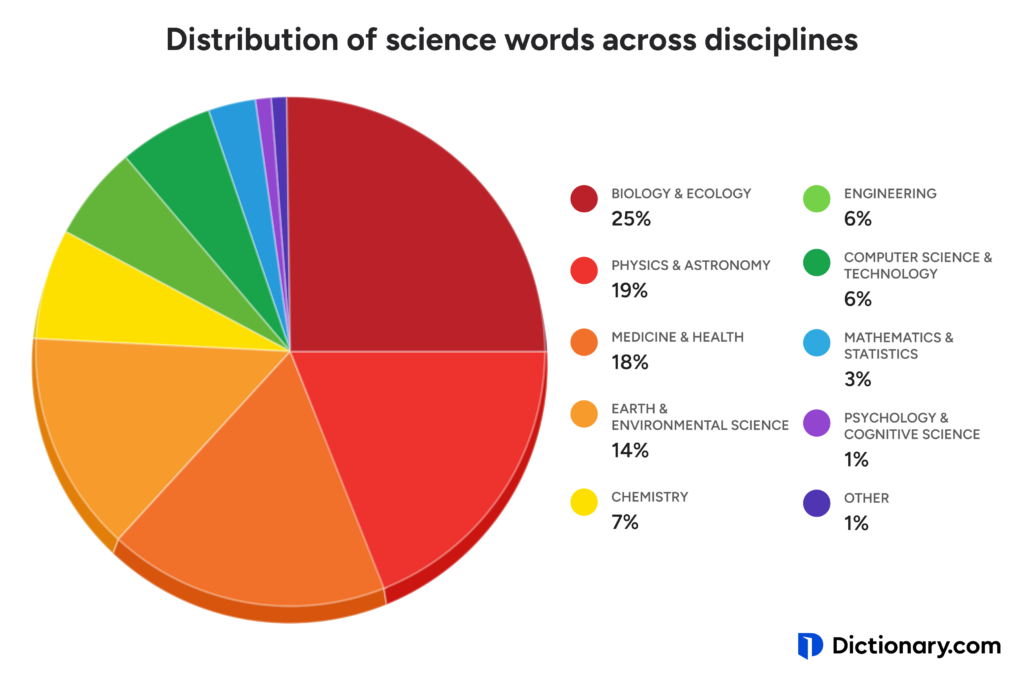
Science is one of the biggest stories in this summer’s word drop. Biology, physics, medicine, and earth science account for many of the new additions, with further entries in chemistry, engineering, computing, mathematics, and psychology.
The chart below shows how these scientific additions are distributed across disciplines.
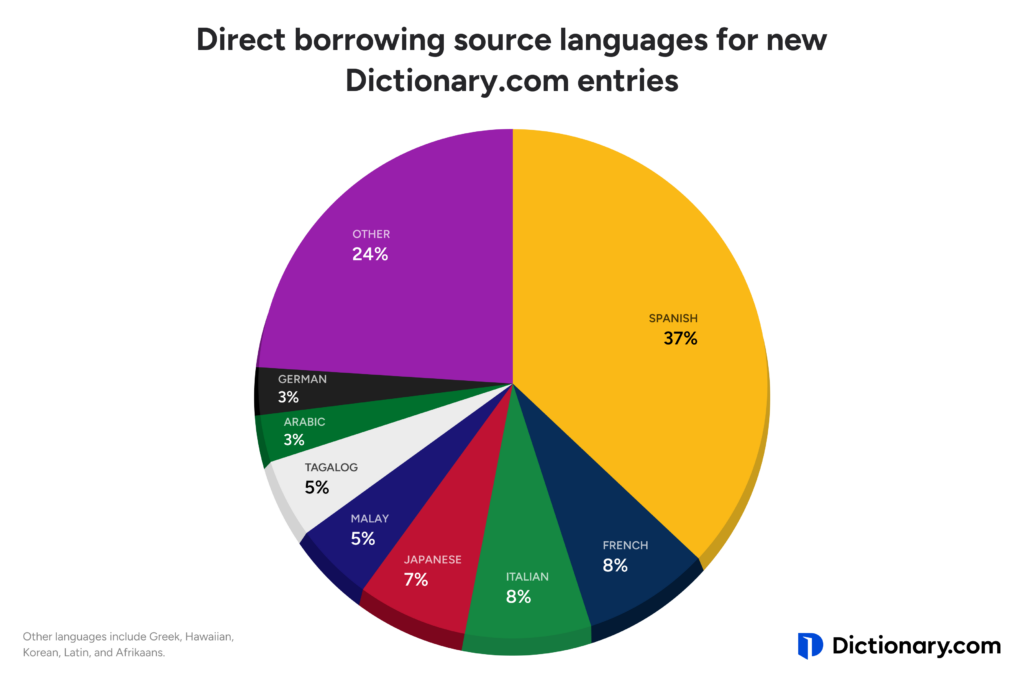
Borrowing also remains an important source of new English vocabulary. Spanish accounts for the largest group of new entries, with additional new words originating in French, Italian, Japanese, Malay, Tagalog, Arabic, and many other languages.
The chart below summarizes the languages of origin represented in this update.
Numbers tell only part of the story, and several larger themes emerge across the update. Online communities continue to generate their own conventions and shorthand; AI is producing a rapidly expanding technical vocabulary; and recent developments in health, sustainability, and culture are leaving their mark.
New Vocabulary Trends in the Digital Age
Our last Word Drop featured the vocabulary that develops around online fandoms and shared interests. This summer’s update looks at digital life more broadly.
Some of the new entries describe the people and practices that shape online communities. Others capture how social media changes the way information flows and people interact. Familiar abbreviations continue to spread across platforms, while AI has inspired an increasingly specialized vocabulary of its own.
Common Terminology Across Online Communities
Online spaces such as social media and forums develop their own conventions for sharing content and interacting with other people. Many of our additions describe practices that are only possible online.
engagement bait
noun. videos, text, or images posted online, the purpose of which is to encourage comments, likes, and similar reactions from the audience.
face reveal
noun. the act, especially by an online content creator, gamer, or the like, of posting a photograph of their own face for the first time.
reply guy
noun. a man who responds to women’s social media posts overly often and in an inappropriate manner.
Acronyms in a Digital Space
Online communication has long favored abbreviations that can express a reaction, frame a question, or establish context in only a few characters. Some are closely associated with particular forums or post formats, while others now appear across digital conversations.
ELI5
abbreviation. explain like I’m five (used to ask for a straightforward and simple explanation of a complex topic or concept).
IYKYK
abbreviation. if you know, you know (used with an allusion to a situation, incident, etc., understood only by those who have experienced or witnessed it).
PFP
abbreviation. profile picture, icon, avatar.
STBX
abbreviation. soon to be ex (husband, wife, boyfriend, girlfriend, spouse, or partner).
The Influence of AI
As generative AI has become more widely used, its vocabulary has expanded well beyond the names of the technologies themselves. Newer terms describe prompting strategies, technical limitations, and the ways AI systems perform particular tasks.
context window
noun. (Computers) the amount of text, measured in tokens, that a large language model can process or reference at a time in order to generate a response.
model collapse
noun. poor-quality output by a generative AI as a result of being trained on data that is itself generated by AI.
overprompt
verb. to supply (an artificial intelligence system or large language model) with an excessive amount of instruction, constraint, or context, especially if it negatively affects the output.
When Fiction Becomes Vocabulary
Digital life accounts for only part of the new vocabulary in this update. Fiction, fandom, and games are all fertile sources of vocabulary. Some terms name creatures or concepts from fictional worlds, while others describe how fans interpret stories or how players interact with games. A few eventually develop broader uses beyond their original contexts.
balrog
noun. a large, evil monster associated with fire and shadow.
fanon
noun. the interpretations of and beliefs about a fictional work, held collectively by a fan community; headcanon.
open world
noun. a setting in a video game that a player can explore and interact with freely, rather than being limited to specific areas or goals.
padawan
noun. an inexperienced person, particularly one being taught by someone more experienced.
Health and the Human Mind
Medicine and psychology both continue to contribute new vocabulary to everyday English. Some of these words describe emerging technologies and treatments, while others give names to familiar experiences, emotions, and patterns of behavior.
bioprinter
noun. a specialized 3D printer used to produce material made of living cells.
longevity escape velocity
noun. a hypothetical situation in which advances in medical science mean that a person’s remaining life expectancy increases at a rate which is faster than the passage of time.
love bomb
noun. (Informal) a gushy display of affection, often for the purpose of manipulation.
trauma bond
noun. an emotional bond that an abuse victim feels toward the person who is abusive to them, particularly when periods of abuse alternate with periods of kindness or affection.
Sustainability in Practice
Many sustainability efforts require language for describing new approaches to agriculture, urban planning, and corporate decision-making. These additions capture several concepts that have gained wider recognition.
agrivoltaics
noun. the practice of using the same piece of farmland both for agricultural purposes and to generate electricity through solar panels.
blue carbon
noun. carbon captured from the atmosphere by coastal ecosystems and stored in the plants, sediments, and algae of the ocean.
greenhushing
noun. the practice of a company not reporting its sustainability efforts, often in order to avoid scrutiny.
sponge city
noun. a type of urban planning model which emphasizes the management of flooding and stormwater through green infrastructure.
Global Food Vocabulary
Culinary vocabulary readily travels between languages and cultures. The additions in this update include dishes, ingredients, and other food terms that are increasingly appearing in English-language menus and social media.
nasi lemak
noun. a Malay dish consisting of rice cooked with pandan leaves in coconut milk, often served with sambal, eggs, cucumber slices, roasted peanuts, fried anchovies, or other sides.
pandan
noun. a screw pine, Pandanus amaryllifolius, whose fragrant leaves are used for flavoring in Southeast Asian cooking.
pandesal
noun. (Philippines) a soft and slightly sweet bread roll, which is often served with sweet fillings or dipped in coffee or hot chocolate.
quesabirria
noun. (Mexican Cooking) a quesadilla whose main filling, along with melted cheese, is beef cooked in the style of birria, usually paired with a spicy, broth-like dipping sauce.
Slang
Informal vocabulary can move quickly, but not every slang term disappears as soon as a trend does. This group highlights informal words and expressions that have found broad use across a variety of contexts.
lost in the sauce
idiom. clueless, confused, or in a fog; preoccupied or disoriented; inebriated.
goated
adjective. (Informal) considered by many people to be the GOAT, the greatest of all time.
glow-up
noun. a positive transformation, generally in appearance but often also in confidence, social capital, or ability.
kiki
noun. a gathering of close friends, especially to share the latest gossip.
How Does a Word Get Into the Dictionary?
A word doesn’t suddenly become “real” when it’s added to the dictionary. Dictionary.com adds words because they’re already being used by a lot of people in the same way and show evidence that they’re likely to stick around. That means a new entry isn’t necessarily a newly coined word.
People pleaser is a good example. The expression has been in use for decades, but Google Trends shows a marked increase in search interest beginning in the mid-2010s and another sustained rise in the early 2020s. That kind of pattern can help lexicographers identify terms that have gained wider currency rather than simply experiencing a brief burst of attention.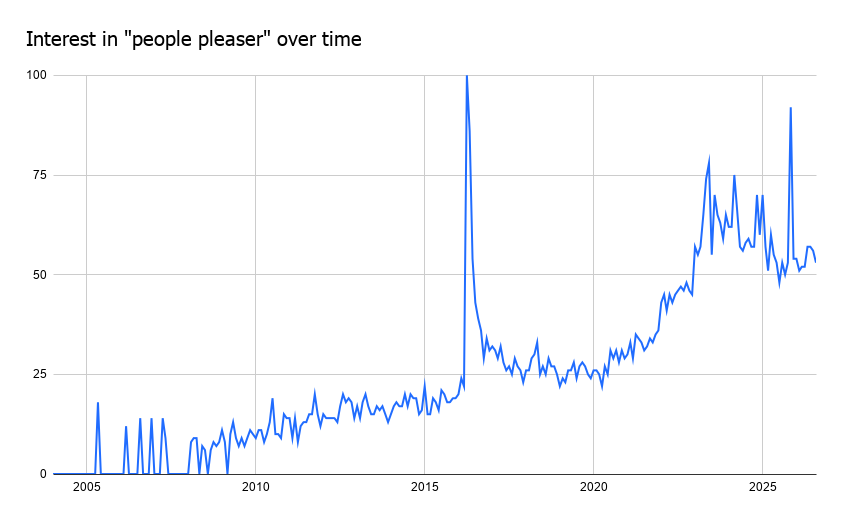
Search trends are only one piece of the evidence. Lexicographers also read widely and search corpora — large collections of written and transcribed language — to determine how frequently a term is used, whether its meaning is widely shared, and whether it will be useful to a general audience. When that evidence shows widespread, sustained use, a word may be ready for its own dictionary entry!
Summary
This summer’s word drop adds 5,900 new words to Dictionary.com and includes more than 1,200 revisions to existing entries. Taken together, the additions show English expanding in several directions at once: through scientific discovery and technological change, through contact with other languages, and through the communities and cultural spaces where people continually find new things to name.
