descent
Americannoun
-
descents
plural
-
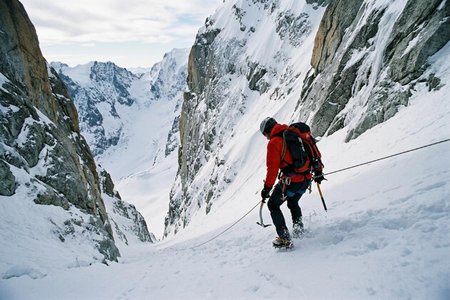
the act, process, or fact of moving from a higher to a lower position.
-
a downward inclination or slope.
-
a passage or stairway leading down.
-
derivation from an ancestor; lineage; extraction.
-
any passing from higher to lower in degree or state; decline.
-
a sudden raid or hostile attack.
-
Law. transmission of real property by intestate succession.
noun
-
the act of descending
-
a downward slope or inclination
-
a passage, path, or way leading downwards
-
derivation from an ancestor or ancestral group; lineage
-
(in genealogy) a generation in a particular lineage
-
a decline or degeneration
-
a movement or passage in degree or state from higher to lower
-
(often foll by on) a sudden and overwhelming arrival or attack
-
property law (formerly) the transmission of real property to the heir on an intestacy
Usage
What’s the difference between descent, dissent, and decent? Descent is a noun that means the act of moving downward (descending), a downward movement, or downward movement in general. Dissent can be a noun meaning disagreement, as in I voiced my dissent, or a verb meaning to disagree, as in The judge is expected to dissent. Decent is an adjective that means adequate or suitable, as in a decent meal, or good or respectable, as in a decent person. Descent and dissent are pronounced exactly the same. Perhaps the best way to remember the difference between them is to think about what related words mean and how they’re spelled. Words related to descent involve movement and are spelled with sc, including descend, ascent, ascension, and transcend. Words related to dissent involve agreement or disagreement and end with -sent, including assent and consent. Despite their similar spelling, descent and decent are pronounced differently. In descent, the emphasis is on the -scent part of the word, with the first part pronounced like dih. In decent, the emphasis is on the first part of the word, which is pronounced like dee. So how can you remember which one gets the s? Dropping the s is the decent thing to do, but you should pick it back up for your descent. (And if you dissent, pick up two s’s). Here’s an example of descent, dissent, and decent used correctly in a sentence. Example: There was dissent among the climbers about when they should make the descent, but they decided to do it while the weather was still decent.
Pop Culture
—Descent from the Cross: A biblical scene popularly depicted in art, of Joseph of Arimathea and Nicodemus removing Christ from the cross after being crucified. — The Descent of Man, and Selection in Relation to Sex: Charles Darwin's book on evolutionary theory, first published in 1871. —“The Descent”: A brief lyric poem by William Carlos Williams, first published in 1948. — The Descent: A science-fiction novel by Jeff Long, published in 1999. — The Descent: A British horror film, released in 2005 (with no relation to the novel of the same name).
Other Word Forms
Derived Forms
Inflected Forms
Nouns
Etymology
Origin of descent
First recorded in 1300–50; Middle English, from Anglo-French, Old French descente, derivative of descendre “to come down,” modeled on such pairs as vente, vendre; see origin at descend
Explanation

If you’re on your way down, you’re making a descent, whether that’s as a passenger in an airplane that's landing, or if you’re tumbling down a staircase you just slipped on. Descent comes from the verb descend — to go down. In the original Latin meaning, descent was used spatially, in reference to physical action, like going downstairs into a creepy basement. Metaphorically, though, we also use it to describe origins, especially in ancestry, when we consider ourselves descendants of our forebears.
Vocabulary lists containing descent
"The Ravine," Vocabulary from the short story
Looking to grow your vocabulary? Check out this interactive, curated word list from our team of English language specialists at Vocabulary.com – one of over 17,000 lists we've built to help learners worldwide!
Flying High: Aviation Words
Interested in learning more words like this one? Our team at Vocabulary.com has got you covered! You can review flashcards, quiz yourself, practice spelling, and more – and it's all completely free to use!
"To Kill a Mockingbird" by Harper Lee, Chapters 16–19
Want to remember this word for good? Start your learning journey today with our library of interactive, themed word lists built by the experts at Vocabulary.com – we'll help you make the most of your study time!
Example Sentences
Examples are provided to illustrate real-world usage of words in context. Any opinions expressed do not reflect the views of Dictionary.com.
See Examples For:
Its peak dive reached 39 degrees; a standard descent is a 3-degree angle.
From The Wall Street Journal ● Oct. 3, 2026

Around 20 minutes after these codes were signalled, the plane looped back into Saudi Arabia, where it later started its manual descent for landing.
From BBC ● Oct. 1, 2026

They expected the dollar’s descent to continue into the second half of the year before bottoming near the end of the year, then turning higher in 2027.
From MarketWatch ● Sep. 25, 2026

If the engine were to fail, for example, a pilot can sometimes perform an “autorotation” procedure to use altitude and forward momentum to force the rotors to turn, easing their descent.
From Los Angeles Times ● Sep. 19, 2026

“We have begun our descent into Miami International Airport. Flight attendants, prepare for landing.”
From "Marcus Vega Doesn't Speak Spanish" by Pablo Cartaya

It tunneled 435 feet through the mountains for slightly easier descents and ascents.
From Los Angeles Times ● Aug. 1, 2026
The athletes are required to employ all their technical nous to transition efficiently, stripping off reusable 'skins' that give their skis grip for climbing so they can freely ski down two descents.
From Barron's ● Feb. 21, 2026

But these descents were far from problem free.
From BBC ● Sep. 28, 2024
The climbs and descents can be as steep as a Swiss Alp, as the M’s have displayed thus far.
From Seattle Times ● Apr. 28, 2024

As she whipped around tight turns and down steep descents, the world whirling around her, Tally felt like something caught in the wind, not knowing which direction the journey would ultimately take her.
From "Uglies" by Scott Westerfeld
Random Word
Spin the wheel and learn a new word!
Get a wordDefinitions and idiom definitions from Dictionary.com Unabridged, based on the Random House Unabridged Dictionary, © Random House, Inc. 2023
Idioms from The American Heritage® Idioms Dictionary copyright © 2002, 2001, 1995 by Houghton Mifflin Harcourt Publishing Company. Published by Houghton Mifflin Harcourt Publishing Company.
