stubborn
Americanadjective
-
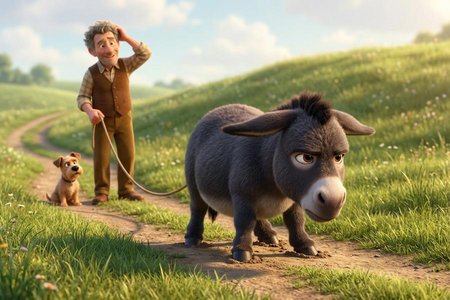
unreasonably obstinate; obstinately unmoving.
a stubborn child.
- Synonyms:
- obdurate, headstrong, unyielding, refractory, intractable, contrary
- Antonyms:
- tractable
-
fixed or set in purpose or opinion; resolute.
a stubborn opponent of foreign aid.
- Synonyms:
- persevering
- Antonyms:
- irresolute
-
obstinately maintained, as a course of action.
a stubborn resistance.
-
difficult to manage or suppress.
a stubborn horse; a stubborn pain.
-
hard, tough, or stiff, as stone or wood; difficult to shape or work.
adjective
-
refusing to comply, agree, or give in; obstinate
-
difficult to handle, treat, or overcome
-
persistent and dogged
a stubborn crusade
Usage
Where does stubborn come from? The origin of stubborn is itself fittingly stubborn, or "unreasonably obstinate." We might assume stubborn is connected to stub, a "short, projecting part or remaining piece" that is often immovable and unyielding. But that just doesn't seem to be true. Stubborn is recorded around 1350–1400 and took such forms as stiborn(e), styborne, and stuborn. Beyond that, we just don't really know. Thanks for nothing, stubborn. Stubborn isn’t alone: it finds lots of company in other English words that seem simple but whose origins are not. Discover more in our slideshow “‘Dog,’ ‘Boy,’ And Other Words That We Don’t Know Where They Came From."
Synonym Usage
Stubborn, dogged, obstinate, persistent imply fixity of purpose or condition and resistance to change. Stubborn and obstinate both imply resistance to advice, entreaty, remonstrance, or force; but stubborn implies more of innate quality and is the more frequently used when referring to inanimate things: stubborn disposition; stubborn difficulties. Dogged implies pertinacity and grimness in doing something, especially in the face of discouragements: dogged determination. Persistent implies having staying or lasting qualities, resoluteness, and perseverance: persistent questioning.
Other Word Forms
Etymology
Origin of stubborn
First recorded in 1350–1400; Middle English stiborn(e), styborne, stuborn ; origin uncertain
Explanation

Use the adjective stubborn to describe someone who is not open to new ideas or ways of doing things, like your uncle who refuses to listen to any music made after 1990. Stubborn is the opposite of flexible. The Middle English version of stubborn carried the sense of “untamable, implacable,” and there’s still a hint of that in how it is used today. A stubborn person holds on to a view or an attitude, refusing to change — to the point of being unreasonable. Things can also be stubborn, like a stain that no amount of scrubbing can clean or a medical condition that, even with treatment, doesn't improve.
Vocabulary lists containing stubborn
The Cay
Looking to grow your vocabulary? Check out this interactive, curated word list from our team of English language specialists at Vocabulary.com – one of over 17,000 lists we've built to help learners worldwide!
"What, of This Goldfish, Would You Wish?" Vocabulary from the short story
Interested in learning more words like this one? Our team at Vocabulary.com has got you covered! You can review flashcards, quiz yourself, practice spelling, and more – and it's all completely free to use!
Inside Out & Back Again
Want to remember this word for good? Start your learning journey today with our library of interactive, themed word lists built by the experts at Vocabulary.com – we'll help you make the most of your study time!
Example Sentences
Examples are provided to illustrate real-world usage of words in context. Any opinions expressed do not reflect the views of Dictionary.com.
Sitting behind the wheel, on our way to the town of Hólmavík, I carefully dodged stubborn sheep who roamed the roads.
From The Wall Street Journal ● Oct. 15, 2026

Leaders in Beijing have struggled for years to reverse a stubborn slump in the once-booming real estate sector, which has dampened consumer confidence and weighed on overall activity.
From Barron's ● Oct. 15, 2026

Hartnett stands out among the roster of stubborn, uncompromisingly masculine leading men from his heyday, proving that there’s much more to winning over an audience than simply playing into the public’s perception.
From Salon ● Oct. 9, 2026

“He’s the richest man on Earth but he’s also sort of a stubborn adolescent at the same time,” Gibney says.
From Los Angeles Times ● Oct. 6, 2026

At first, Watson feared that her “sharp, stubborn mind, caught in her self-made...trap” would resist the model.
From "The Gene" by Siddhartha Mukherjee

Random Word
Spin the wheel and learn a new word!
Get a wordDefinitions and idiom definitions from Dictionary.com Unabridged, based on the Random House Unabridged Dictionary, © Random House, Inc. 2023
Idioms from The American Heritage® Idioms Dictionary copyright © 2002, 2001, 1995 by Houghton Mifflin Harcourt Publishing Company. Published by Houghton Mifflin Harcourt Publishing Company.
