cultivate
Americanverb (used with object)
-
cultivates,
present (3rd person singular)
-
cultivated,
past participle, past
-
cultivating
present participle
-
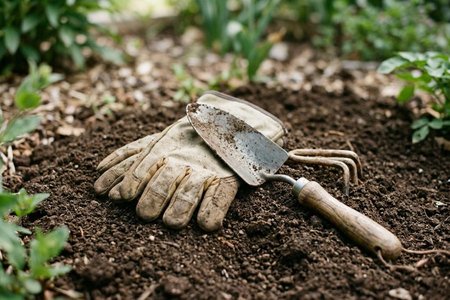
to prepare and work on (land) in order to raise crops; till.
-
to use a cultivator on.
-
to promote or improve the growth of (a plant, crop, etc.) by labor and attention.
-
to produce by culture.
to cultivate a strain of bacteria.
-
to develop or improve by education or training; train; refine.
to cultivate a singing voice.
-
to promote the growth or development of (an art, science, etc.); foster.
-
to devote oneself to (an art, science, etc.).
-
to seek to promote or foster (friendship, love, etc.).
-
to seek the acquaintance or friendship of (a person).
verb
-
to till and prepare (land or soil) for the growth of crops
-
to plant, tend, harvest, or improve (plants) by labour and skill
-
to break up (land or soil) with a cultivator or hoe
-
to improve or foster (the mind, body, etc) as by study, education, or labour
-
to give special attention to
to cultivate a friendship
to cultivate a hobby
-
to give or bring culture to (a person, society, etc); civilize
Usage
What does cultivate mean? When used literally, cultivate means to take steps to grow something or improve its growth, especially crops. When used figuratively, it means much the same thing, except that the thing being grown or improved is often an abstract thing, such as a business or a friendship. The literal sense of cultivate is most often used in the context of agriculture, but it can also refer to things being grown in a laboratory. Its figurative sense can apply to many different things, such as relationships, skills, and even cultures. Example: Farmers have cultivated a variety of crops in this region.
Other Word Forms
Derived Forms
-
overcultivateverb (used with object)
-
precultivateverb (used with object)
-
recultivateverb (used with object)
Inflected Forms
Participles
Conjugated Forms
Present
-
cultivatesimple
-
cultivatessimple
-
have cultivatedperfect
-
has cultivatedperfect
-
am cultivatingprogressive
-
are cultivatingprogressive
-
is cultivatingprogressive
-
have been cultivatingperfect progressive
-
has been cultivatingperfect progressive
Past
-
cultivatedsimple
-
had cultivatedperfect
-
was cultivatingprogressive
-
were cultivatingprogressive
-
had been cultivatingperfect progressive
Future
Etymology
Origin of cultivate
First recorded in 1610–20; from Medieval Latin cultīvātus, past participle of cultīvāre “to till,” equivalent to cultīv(us) “tilled,” derivative of Latin colere “to inhabit, till” + -īvus -ive + -āre, infinitive suffix; cf. cult
Explanation

To cultivate is to nurture and help grow. Farmers cultivate crops, fundraising professionals cultivate donors, and celebrities cultivate their images. When you cultivate something, you work to make it better. Originally, the word referred only to crops that required tilling, but the meaning has widened. No matter what is being cultivated, the word implies a level of care that is reminiscent of gardening. Sometimes friendships come naturally and sometimes you have to cultivate them. To cultivate anything requires an attention to detail, an understanding of what is being cultivated, and a lot of patience.
Vocabulary lists containing cultivate
The Vernal Vocabulary of Spring
Looking to grow your vocabulary? Check out this interactive, curated word list from our team of English language specialists at Vocabulary.com – one of over 17,000 lists we've built to help learners worldwide!
The SAT: Multiple-Meaning Words, List 5
Interested in learning more words like this one? Our team at Vocabulary.com has got you covered! You can review flashcards, quiz yourself, practice spelling, and more – and it's all completely free to use!
List 7
Want to remember this word for good? Start your learning journey today with our library of interactive, themed word lists built by the experts at Vocabulary.com – we'll help you make the most of your study time!
Example Sentences
Examples are provided to illustrate real-world usage of words in context. Any opinions expressed do not reflect the views of Dictionary.com.
See Examples For:
Then again, a well-designed AI could suggest alternative interpretations, make uncertainty visible, and help us cultivate rather than surrender that capacity.
From The Wall Street Journal ● Sep. 27, 2026

A fraudster can try to cultivate a financial or romantic relationship by pretending to be someone else.
From MarketWatch ● Sep. 25, 2026

Being on site helps reporters cultivate sources and break news, which in turn helps inform those of us who don’t have access to the building.
From Slate ● Sep. 21, 2026

Leading up to the flagship’s opening, the community it would come to cultivate over the following two years was already taking shape behind the scenes.
From Los Angeles Times ● Sep. 11, 2026

I said: “But I need it. I was going to cultivate the corn.”
From "Z for Zachariah" by Robert C. O’Brien

The steady support these characters give to one another is the secret to the success of Lion’s hagwon, which cultivates a caring, low-pressure educational environment as opposed to the usual factory-line exam drilling.
From The Wall Street Journal ● Sep. 21, 2026
What he cultivates instead is patience – the type of glacial cool it takes to seize a cosmic destiny.
From Salon ● Aug. 31, 2026

The Huntington cultivates them on-site and has distributed many to botanic gardens and zoos across the country.
From Los Angeles Times ● Jul. 10, 2026
How he works with the White House - and the kind of relationship he cultivates with the president - could prove crucial for implementing his agenda.
From BBC ● Jan. 1, 2026

But now that I no longer live as a Catholic in a Catholic world, I cannot expect the liturgy—which reflects and cultivates my faith—to remain what it was.
From "Hunger of Memory" by Richard Rodriguez
The protected area Kunagado and his friends have cultivated is bursting with corals and is now home to hundreds of heat-resistant "super corals" that may protect the village from the impacts of rising sea temperatures.
From Barron's ● Oct. 17, 2026

It causes the most serious fungal disease affecting cultivated rice and has also become a major threat to wheat and barley in parts of Asia and Africa.
From Science Daily ● Oct. 15, 2026

Disney World, for example, has practically made an industry out of carefully cultivated hospitality.
From Salon ● Oct. 11, 2026
Jordan’s carefully cultivated space looks like the result of very intentional planning and list making.
From Los Angeles Times ● Sep. 9, 2026
Cereal crops have the virtues of being fast growing, high in carbohydrates, and yielding up to a ton of edible food per hectare cultivated.
From "Guns, Germs, and Steel: The Fates of Human Societies" by Jared M. Diamond
At age 12, Martínez Celaya entered into an apprenticeship with a painter — the start of his formal artistic training — and around the same time he began cultivating an interest in writing and philosophy.
From Los Angeles Times ● Oct. 2, 2026
It is a very different operation from the traditional way of cultivating avocados in India, where they were planted among other crops for shade.
From BBC ● Sep. 4, 2026
Jersey Mike’s Subs, which recently went public after a Blackstone takeover, spent decades cultivating exactly that customer.
From The Wall Street Journal ● Sep. 1, 2026
"At a time when the US-Japan Alliance is dedicated to cultivating prosperity across the Indo-Pacific, we strongly oppose any action that undermines its peace and stability," Glass added.
From Barron's ● Aug. 14, 2026
But, by 8500 BC, the Middle East was peppered with permanent villages such as Jericho, whose inhabitants spent most of their time cultivating a few domesticated species.
From "Sapiens: A Brief History of Humankind" by Yuval Noah Harari
Random Word
Spin the wheel and learn a new word!
Get a wordDefinitions and idiom definitions from Dictionary.com Unabridged, based on the Random House Unabridged Dictionary, © Random House, Inc. 2023
Idioms from The American Heritage® Idioms Dictionary copyright © 2002, 2001, 1995 by Houghton Mifflin Harcourt Publishing Company. Published by Houghton Mifflin Harcourt Publishing Company.
