Foxy, Catty, Fishy: Traits for Animals or Humans?
Why do we call a suspicious situation fishy, a determined person dogged, or a shy smile sheepish? This article explores the surprising origins of animal-inspired adjectives and how words once used to describe creatures came to reflect human traits and behaviors.
Dogged
Dogs have always been “man’s best friend,” and yet the word dog when used to describe a person (“he’s such a dog”) has negative connotations.
Originally, the adjective dogged also meant “like a dog” in a disparaging way (in addition to the canine meaning). Of course, this was in the Middle Ages when, it seems, cats, dogs, and animals in general weren’t being treated as beloved pets nearly as often. In turn, their names were used as terms to mistreat humans.
But then, in the 1770s, when fox hunting was a popular pastime, being dogged no longer signified a violent, uncouth, slobbering, mangy oaf. Such a transformation is probably thanks to the hunting hound, who pursued its prey with relentless determination and rewarded its master with a feast on the table or a trophy on the wall. Doggedness now carries that sense of resolute and even stubborn single-mindedness in pursuit of personal goals.
Fishy
Sautéed fish is delicious to eat when fresh, but if it sits around for a while it starts to smell like a corpse rotting in aged seaweed and salty armpit sweat. Not pleasant and not safe. So too are fishy things and people. When a person or situation seems suspicious, or doesn’t pass the smell test, it’s time to step back and cut bait.
The adjective fishy was used as far back as the 1400s. At that time it referred more to the fish’s literal slippery, slimy characteristics. Hop forward about 150 years and people began to describe off-tasting foods as fishy. It took another 300 years for fishy to achieve its full-figured figurative meaning associated with people: In 1840, fishy was first recorded to mean “shady” or “questionable,” creating a spectacular metaphor of slippery rot that people still use to this day.
Asinine
Asinine people are “silly” or “stupid.” If you giggle because you hear an “ass” in asinine, you’ve spotted the animal inspiration behind this word. The word derives from the Latin asinus, meaning “ass, dolt, or blockhead.” What is it about asses or donkeys that led people to equate them with foolishness and unintelligence? Like cats, we think asses got the short end of the stick when humans transformed their name into an adjective.
The association has less to do with the actual animal than with how the animal has been described in literature over centuries. In “The Ass and the Lapdog,” from Aesop’s fables, the ass was the farmer’s favorite “beast of burden.” But, after the donkey imitated the lapdog by yipping and licking and prancing around, he was beaten for being a “clumsy” jester or fool — ostensibly, in the story, the ass was considered stupid for thinking he could be someone he wasn’t. Poor guy.
Hawkish
Hawks are birds of prey, with razor talons and a sharp beak for ripping and tearing into flesh. Hawks also have excellent vision. When, in the early 1700s, hawkish meant “hawk-like,” it probably carried with it connotations of the “predator with excellent eyesight,” or, more broadly, someone with a keen skillset. This broader usage explains why parents today watch their kids “like a hawk.”
In 1798, Thomas Jefferson called upon these characteristics to paint a more militaristic picture, using the term war hawk to signify “one who is eager for the fray,” as he described the Federalists who were pressing for war with France.
By the 1960s, Vietnam War supporters were simply being called hawks. Those who advocated peace were the doves. The adjective hawkish appeared around this time, continuing to evoke that pro-warfare stance. Just as a real hawk doesn’t wait around for prey, but actively attacks, a hawkish person advocates aggressive behavior, or military action, to accomplish a goal.
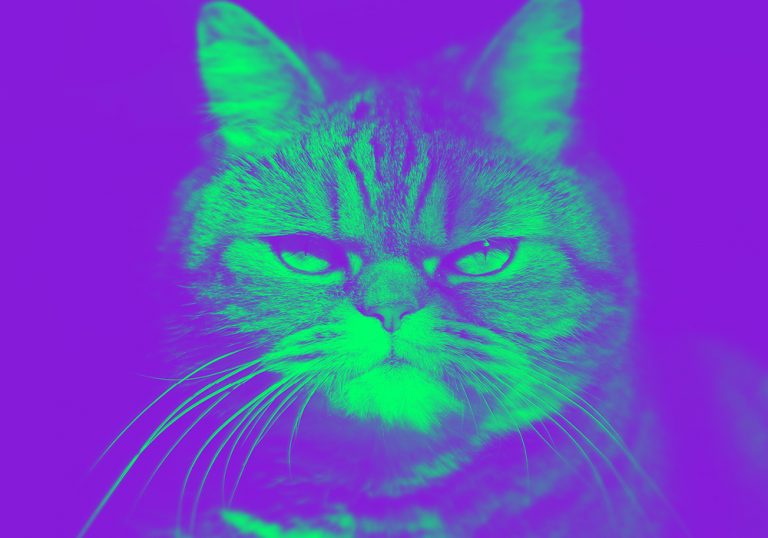
Catty
It seems horribly unfair to adorable cats that catty is a human descriptor meaning “devious or spiteful.” What gives?
The word cat has been around as far back as the year 700, if not further. But then, in the Middle Ages, cat took on an offensive second meaning and was slang for “prostitute.” The association might have been made because prostitutes, like cats, roamed the streets and alleyways. Maybe they had “cat fights” after dark, but the ladies wouldn’t have been described as catty until much later.
In 1886, the word catty pounced on the scene with the same meaning it carries today. Maybe cat’s negative metaphorical meanings from centuries past were part of the mentality surrounding catty‘s usage at the time. (Also, Victorians didn’t really like cats for a while, so that could be a reason behind the meaning too. They viewed kitties as scruffy, devious street animals.)
Sheepish
Nowadays, sheepishness relates to bashfulness or embarrassment, particularly after doing something wrong or foolish. You’d probably wear a sheepish expression after running up behind someone you think you know, covering their eyes, and exclaiming a silly “Guess who!” only to find out the person whose face you’re grabbing is a panicked stranger’s.
What qualities of sheep could have led to the meaning of sheepish? According to sheep experts, ovines are gregarious animals within their flock. Social animals probably grin a lot, right? Hence, “sheepish grin.” (Of course, we’re anthropomorphizing here.) Sheep stay in groups while grazing. But if separated from the group, a lone sheep will become skittish and agitated. Maybe, that’s what people referenced when sheepish began to mean “foolish” in the 17th century.
In the late 1600s, the word acquired the sense of shy foolishness and awkwardness among strangers. A dictionary from 1708 paints a dismal picture of a “lubberly [clumsy] fellow, who is half a fool, and has no life, blood, nor spirit in him; unable to utter a word for himself, thro’ foolish sheepishness, and whose very lips are pale and languid.”
Can we call him a poor little lamb?
Sluggish & slothful
Many animal adjectives, like sheepish, started out simply meaning “like a sheep” or “like [insert animal].” Over time, particular qualities or behaviors of the animal (e.g., the sheep’s skittishness) became associated with human features and behaviors. But, with sluggish and slothful, the process is reversed. Wait a minute — that means sluggish people aren’t “like slimy, squidgy gastropods“? And a slothful couch-potato isn’t “like a slow-moving arboreal mammal” sprawled out on the sofa?
Sluggish and slothful people are seen as lazy, so much so that it was the laziness of human beings that inspired the name for the creatures slug and sloth, not the other way around! In the Middle Ages, sluggish and slothful described slow, indolent, idle people centuries before they referred to slippery snails and cute tree-hanging mammals.
Squirrelly
Perhaps slugs and sloths are actually spirited and industrious creatures, they just go about it in a way that’s not obvious to humans. One thing is for certain: They’d never be described as squirrelly.
In the 1890s, squirrelly meant “abounding in squirrels”; that means people first used the adjective to describe a place (like a park). It sounds funny now to describe “a squirrelly park,” but back then, it was simply a place full of little nutcrackers. Over time, the adjective started to draw upon the essence of the squirrel itself, linking up with a quality that the squirrel seemed to naturally display as it spent its life frantically finding and burying nuts.
To humans, sometimes squirrels look a little “nuts,” or crazy, running full speed in one direction only to halt instantly and then scamper down a different path. They look fidgety, jumpy, or flighty, which is what the adjective squirrelly means today when describing a person.
Chicken
Chicken wasn’t used as an adjective to mean “weak” or “scared” until the 1930s, but the cluckers have been called upon to refer to human cowardice for hundreds of years. It’s not clear why chickens are connected to weakness and fear, but maybe it’s because centuries of raising and eating chickens have shown that a farmer coming into your territory with a hungry look in his eyes would make any creature turn tail.
Before people were saying things like “he’s too chicken to jump off that rope swing” (i.e., using chicken as an adjective), they were simply calling him a chicken, in the noun sense. The earliest example of this in literature goes back to 1600 when a character in William Kemp’s Nine Days’ Wonder calls his enemy “a hoddy doddy! a hebber de hoy! a chicken! a squib.” Hoddy doddy meant “fool,” hebber de hoy an “awkward gawky youth,” and squib a “paltry fellow” or “coward.” (Pro tip: These are great words to bring back today if calling someone “chicken” is too basic.)
Foxy
Why, in the English language, is there a lexical option that likens a sexually attractive woman to a four-pawed feline-looking canine? What fox-like qualities did humans take note of and go “Yeah, that’s hot”?
In the 1520s, about 300 years before foxy became slang for “sexually appealing,” the term meant “crafty” and “cunning.” Those synonyms still apply today. Maybe that’s in part what humans found (and find) attractive, that quality of “cunning” foxes display; the skillful, slinky, surreptitious behavior, which for catty is “devious,” but for foxy is “sly” and “mysterious.”
Interestingly, in the 1500s, though women weren’t foxy yet, the Vulpes genus was associated with females: ladies with attitudes were called vixens (the term for a female fox). It wasn’t until 1895 that, ironically, the male Vulpes term, foxy, referred to a sexy lady. The term gained popularity in the 1940s (a time when fox stoles were really popular). Jimi Hendrix’s “Foxy Lady” helped solidify the term’s sexy semantics in the ’70s.
