kin
noun
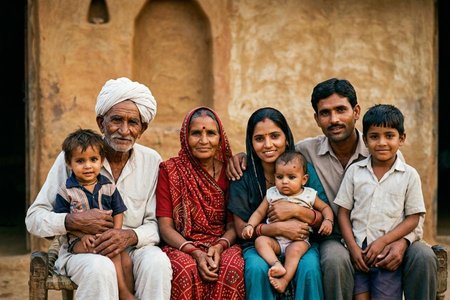
a person's relatives collectively; kinfolk.
a person's relatives collectively; kindred
a class or group with similar characteristics
See next of kin
(postpositive) related by blood
a less common word for akin
What does -kin mean? The suffix -kin is used as a diminutive. In other words, it denotes that something is "little," either literally or figuratively. It is very occasionally used in a variety of informal and everyday terms. The form -kin comes from Middle English. Similar diminutives in English include -en (as in kitten) and -y (as in baby). Check out our entries for both suffixes to learn how frequently they appear.
First recorded before 900; Middle English; Old English cyn; cognate with Old Saxon, Old High German kunni, Old Norse kyn, Gothic kuni; akin to Latin genus, Greek génos, Sanskrit jánas; see gender 1.
Middle English < Middle Dutch, Middle Low German -ken; cognate with German -chen

Some say kin, others say "family" or "relatives." Call them what you will, but you’re stuck with those people related to you by blood or marriage. When someone refers to their kith and kin, she means her friends and family. Both words date back to Old English, with kin reaching back to the 700s. Originally referring to one’s family or race, kin narrowed to refer just to one’s blood relations. Your "next of kin" is your closest family member: spouse, child, parent, or sibling.
Looking to grow your vocabulary? Check out this interactive, curated word list from our team of English language specialists at Vocabulary.com – one of over 17,000 lists we've built to help learners worldwide!
Interested in learning more words like this one? Our team at Vocabulary.com has got you covered! You can review flashcards, quiz yourself, practice spelling, and more – and it's all completely free to use!
Want to remember this word for good? Start your learning journey today with our library of interactive, themed word lists built by the experts at Vocabulary.com – we'll help you make the most of your study time!
Examples are provided to illustrate real-world usage of words in context. Any opinions expressed do not reflect the views of Dictionary.com.
Their identities haven’t been released, pending notification of their next of kin.
From Los Angeles Times ● Oct. 21, 2026

"As the surviving relatives and close kin of the fallen age and pass away, we risk losing a vital source of reference data," Thanh said.
From Barron's ● Oct. 14, 2026

When you are among kin, he tells me, “It is more so about amplifying the beauty that’s there. And the simplicity too.”
From Los Angeles Times ● Sep. 11, 2026
Supt Chris Clarke, the Met's lead for emergency response policing in the area, said the force was urgently working to identify the victim and inform his next of kin.
From BBC ● Aug. 26, 2026

“Tell me man in dat show kin play a tune on a handsaw. Pick hit like a banjo.”
From "The Sound and the Fury" by William Faulkner

The same is the case with the superadded syllables: -kin being Saxon; -et Norman.
From A Handbook of the English Language by R. G. (Robert Gordon) Latham

Spin the wheel and learn a new word!
Get a wordDefinitions and idiom definitions from Dictionary.com Unabridged, based on the Random House Unabridged Dictionary, © Random House, Inc. 2023
Idioms from The American Heritage® Idioms Dictionary copyright © 2002, 2001, 1995 by Houghton Mifflin Harcourt Publishing Company. Published by Houghton Mifflin Harcourt Publishing Company.